What are Orthoptera?
The order Orthoptera ("straight-winged") includes grasshoppers, crickets, katydids, locusts, and wētā. These insects are characterized by their enlarged hind legs adapted for jumping, leathery forewings (tegmina), and the ability of many species to produce sound through stridulation — rubbing body parts together.
Orthoptera is divided into two suborders: Caelifera (grasshoppers and locusts) and Ensifera (crickets and katydids).
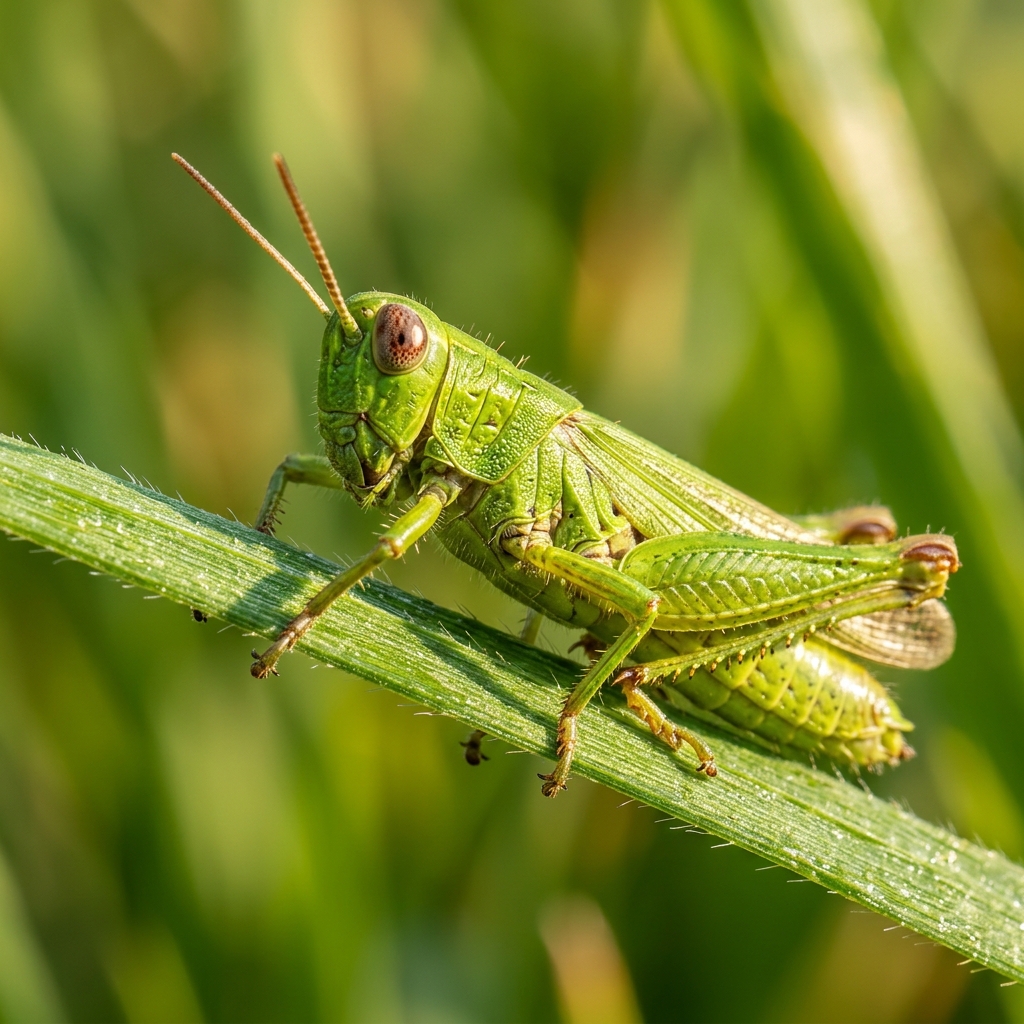
Suborder Caelifera — Grasshoppers & Locusts
- Short-horned grasshoppers / Locusts (family Acrididae): The largest grasshopper family. Distinguished by short antennae. Certain species undergo a dramatic transformation from solitary grasshoppers into swarming locusts when population density reaches a threshold. Desert locust swarms can contain billions of individuals and devastate entire regions' crops.
- Pygmy grasshoppers (family Tetrigidae): Tiny grasshoppers with an elongated pronotum extending backward over the abdomen. Many are semi-aquatic and can swim or walk on water.
- Pygmy sand crickets (family Tridactylidae): Minute, cricket-like insects (2-9mm) that live along sandy stream banks. Despite their name, they belong to Caelifera rather than the cricket suborder.
Suborder Ensifera — Crickets & Katydids
Crickets (family Gryllidae)
Known for their melodic chirping, produced by rubbing the file on one wing against the scraper on the other. Cricket chirp rate correlates with temperature — count the chirps in 14 seconds and add 40 to get the temperature in Fahrenheit (Dolbear's Law).
Bush Crickets / Katydids (family Tettigoniidae)
- Cone-headed grasshoppers (subfamily Copiphorinae): Katydids with strongly pointed heads. Powerful jaws can deliver a painful bite.
- Meadow grasshoppers (subfamily Conocephalinae): Small, green katydids found in wet meadows and grasslands.
- Shield-backed katydids (subfamily Tettigoniinae): Large, robust katydids with a shield-like pronotum. Many are flightless and omnivorous.
Wētā & Allies (family Anostostomatidae)
- Giant wētā (genus Deinacrida): Found only in New Zealand, giant wētā are among the heaviest insects in the world — individuals can weigh up to 70 grams, heavier than a sparrow. They are living fossils, having changed little in 190 million years.
King Crickets & Allies (family Gryllacrididae)
- Leaf-rolling grasshoppers (subfamily Gryllacridinae): Nocturnal insects that create silk-lined leaf shelters for daytime hiding.
- Raspy crickets (subfamily Gryllacridinae): Named for the rasping sound they make. Found mainly in Australia and tropical regions.
- Jerusalem crickets (subfamily Stenopelmatinae): Large, burrowing insects of western North America and Central America. Despite their name, they are not true crickets, not from Jerusalem, and not particularly dangerous — though their powerful jaws can bite.
Mole Crickets (family Gryllotalpidae)
Remarkable burrowing insects with shovel-like forelegs adapted for digging. They can fly, swim, and dig — one of the few insects mastering all three forms of locomotion. Males construct specially shaped burrows that act as acoustic megaphones, amplifying their mating calls to be heard over 600 meters away.