What are Diptera?
The name Diptera ("two-winged") reflects this order's defining feature — only one pair of functional wings. The second pair has evolved into halteres, club-shaped balancing organs that act as biological gyroscopes, giving flies unmatched aerial maneuverability.
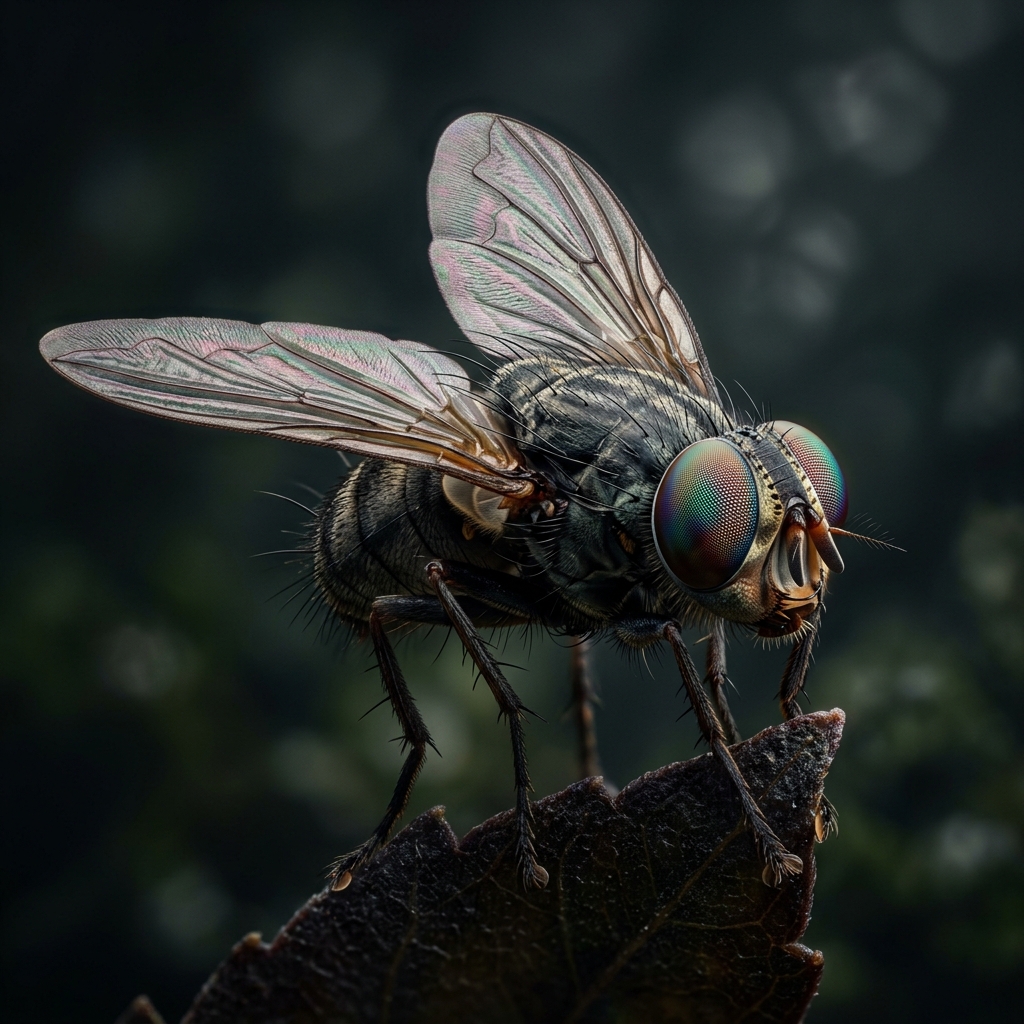
Complete Fly Family Guide
Blood-Feeders & Disease Vectors
- Mosquitoes (family Culicidae): ~3,500 species. The deadliest animals on Earth (700,000+ human deaths/year).
- Genus Aedes: Vectors of dengue, Zika, yellow fever, and chikungunya.
- Genus Anopheles: The primary vectors of malaria — humanity's greatest infectious disease killer.
- Genus Culex: Vectors of West Nile virus and Japanese encephalitis.
- Horse flies (family Tabanidae): Large flies with blade-like mouthparts that slash skin open and lap up blood. Females deliver one of the most painful insect bites.
- Black flies (family Simuliidae): Small but numerous blood-feeders. Vector of river blindness (onchocerciasis) in Africa.
- Sand flies (family Phlebotomidae): Tiny flies that transmit leishmaniasis, a parasitic disease affecting 12 million people globally.
- Tsetse flies (genus Glossina): Vector of African sleeping sickness (trypanosomiasis). Both sexes feed on blood — unusual among flies.
- Stable flies (Stomoxys calcitrans): Blood-feeding flies that resemble houseflies but deliver painful bites to livestock and humans.
- Horn flies (Haematobia irritans): Major pests of cattle, taking 20-40 blood meals per day.
- Louse flies (family Hippoboscidae): Flattened, often wingless ectoparasites of birds and mammals. Some species shed their wings after finding a host.
- Bat flies (families Nycteribiidae and Streblidae): Bizarre wingless or reduced-wing parasites exclusively of bats. Spider-like in appearance.
Household & Agricultural Flies
- Houseflies (Musca domestica, family Muscidae): Process visual information 4× faster than humans. Taste food with their feet. Regurgitate digestive enzymes onto food before eating.
- Blow flies (family Calliphoridae): Metallic green or blue flies attracted to carrion and wounds. Important in forensic entomology for determining time of death.
- Flesh flies (family Sarcophagidae): Deposit live larvae rather than eggs on carrion. Gray-striped appearance.
- Fruit flies (families Tephritidae and Drosophilidae):
- Vinegar flies (genus Drosophila): D. melanogaster is the most important model organism in genetics research. 60% of its genes have human equivalents. Six Nobel Prizes have been awarded for Drosophila research.
- Frit flies (family Chloropidae): Small flies, some species are agricultural pests of cereals.
- Anthomyiid flies (family Anthomyiidae): Root maggots — larvae of some species are major pests of onions, cabbages, and other crops.
- Rust flies (family Psilidae): Carrot rust fly larvae tunnel through carrot roots.
Predatory & Beneficial Flies
- Hover flies (family Syrphidae): Important pollinators that mimic bees and wasps. Can hover motionless in mid-air. Larvae of many species are voracious aphid predators.
- Robber flies (family Asilidae): Powerful aerial predators that intercept prey in flight, injecting paralyzing venom. Some species take down dragonflies and bees.
- Tachinid flies (family Tachinidae): Over 10,000 species of parasitoid flies — larvae develop inside host insects. Extremely important for natural pest control.
- Long-legged flies (family Dolichopodidae): Small, metallic green predatory flies common on foliage. Males perform elaborate courtship displays.
Aquatic & Semi-Aquatic Flies
- Crane flies (family Tipulidae): Large, gangly "daddy longlegs" flies. Despite myths, they don't eat mosquitoes — most adults don't feed at all.
- Midges (family Chironomidae): Non-biting midges that form enormous mating swarms visible from kilometers away. Larvae are vital food for freshwater fish.
- Biting midges (family Ceratopogonidae): Tiny but fierce biters. "No-see-ums" that slip through standard mesh screens.
- Phantom midges (family Chaoboridae): Nearly transparent aquatic larvae that vertically migrate in lakes daily.
- Shore flies (family Ephydridae): Includes Ephydra hians, Mark Twain's "Mono Lake fly" — larvae and pupae survive in highly alkaline, arsenic-rich water.
- Marsh flies (family Sciomyzidae): Larvae are parasitoids or predators of snails and slugs — used in biological control of snail-borne diseases.
- Moth flies (family Psychodidae): Fuzzy, moth-like drain flies. Some tropical species (sand flies) are disease vectors.
Specialized & Unusual Flies
- Bot flies (family Oestridae): Parasites whose larvae develop under the skin of mammals. The human bot fly (Dermatobia hominis) uses mosquitoes as delivery vehicles for its eggs.
- Warble flies (family Oestridae): Cattle parasites causing significant economic damage.
- Gall midges (family Cecidomyiidae): Including the Hessian fly (Mayetiola destructor), one of the most destructive wheat pests in history.
- Fungus gnats (families Sciaridae and Mycetophilidae): Larvae feed on fungi. Some New Zealand cave species produce bioluminescent silk threads to attract prey — the famous "glowworm caves."
- Balloon flies (family Acroceridae): Bizarre small-headed flies whose larvae are internal parasitoids of spiders.
- Humpbacked flies (family Phoridae): Tiny flies including the "coffin fly" that can colonize buried remains.
- Stalk-eyed flies (family Diopsidae): Eyes on long stalks — males with wider eye-spans win more mates. An extreme example of sexual selection.
- Thick-headed flies (family Conopidae): Wasp-mimicking parasitoids that attack bumblebees in flight.
- Soldier flies (family Stratiomyidae): Includes the black soldier fly, commercially raised for waste processing and animal feed protein.
- Dung flies (family Scatophagidae): Adults are predatory; found on cow dung where they hunt smaller flies.
- March flies (family Bibionidae): Appear in large numbers in spring. Important early-season pollinators.
- Snipe flies (family Rhagionidae): Predatory flies often found resting head-down on tree trunks.
- Stiletto flies (family Therevidae): Larvae are soil-dwelling predators of beetle larvae.
- Picture-winged flies (family Otitidae): Ornate wing patterns used in courtship displays.
- Window flies (family Scenopinidae): Small flies often found on windows. Larvae are predators of carpet beetle larvae.
- Skippers (family Piophilidae): Larvae can jump using their mouthparts — called "cheese skippers" as they infest stored cheeses.