What are Lepidoptera?
The order Lepidoptera ("scale-winged") is defined by wings covered in thousands of tiny overlapping scales that create brilliant colors and patterns. All undergo complete metamorphosis: egg → larva (caterpillar) → pupa (chrysalis/cocoon) → adult.
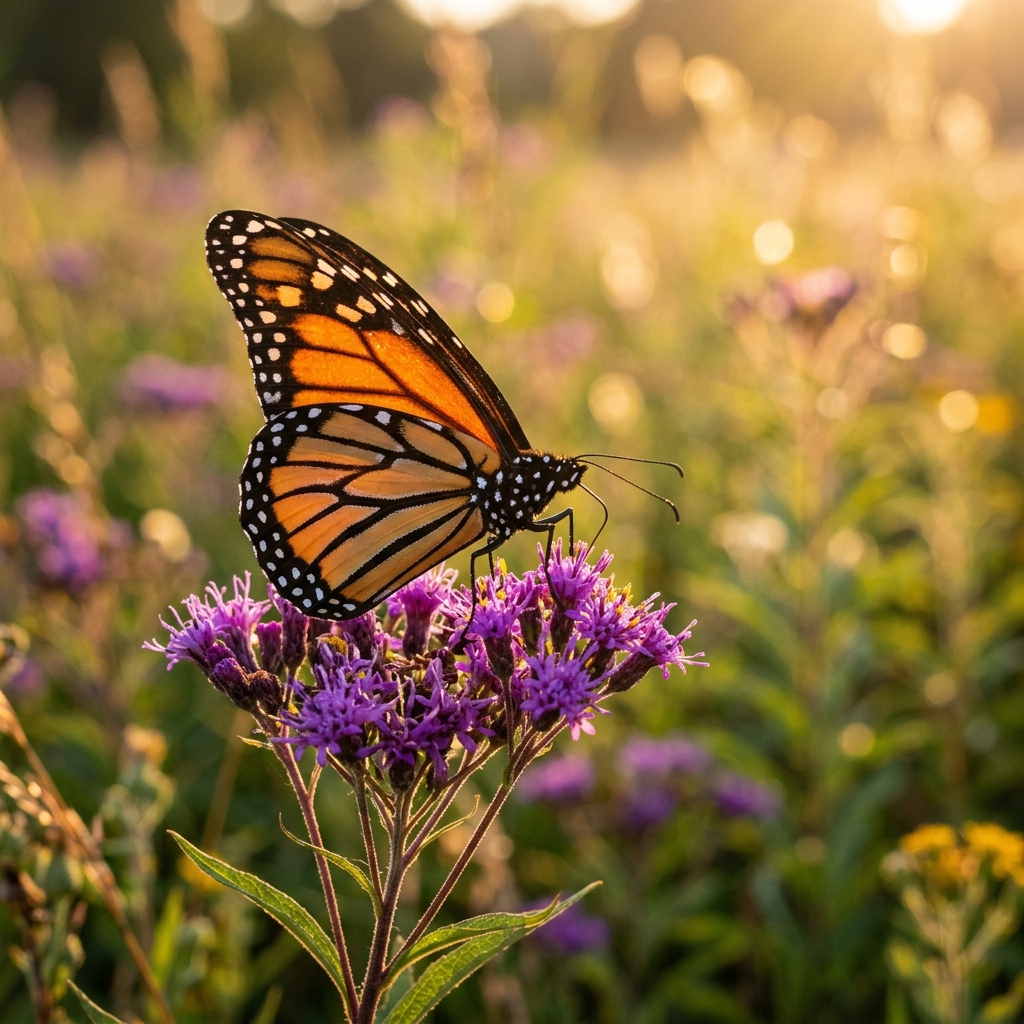
Butterflies — Superfamily Papilionoidea
Brush-Footed Butterflies (family Nymphalidae)
The largest butterfly family with over 6,000 species. Named for their reduced, brush-like front legs.
- Admirals (subfamilies Limenitidinae and Nymphalinae): Bold, colorful butterflies.
- Painted lady (Vanessa cardui): The most widespread butterfly on Earth — found on every continent except Antarctica and South America. Undertakes massive long-distance migrations.
- Fritillaries (multiple genera): Orange and black butterflies with silver-spotted undersides. Many species are threatened by habitat loss.
- Milkweed butterflies (subfamily Danainae):
- Monarch butterfly (Danaus plexippus): Famous for its 3,000-mile annual migration from Canada to Mexico. Toxins from milkweed make them unpalatable to predators. Multiple generations complete the journey.
- Satyr butterflies (subfamily Satyrinae): Brown butterflies with eyespots, found in grasslands and woodlands. Subdued coloring provides camouflage among dead leaves.
Gossamer-Winged Butterflies (family Lycaenidae)
About 6,000 species of mostly small, delicate butterflies. Many have complex relationships with ants.
- Blue butterflies (subfamily Polyommatinae): Males display iridescent blue upper wings. Many species depend on specific ant species for larval survival.
- Copper butterflies (subfamily Lycaeninae): Bright metallic copper-orange wings. Associated with dock and sorrel plants.
- Harvesters (subfamily Miletinae): The only carnivorous butterflies in North America — larvae feed on woolly aphids.
- Hairstreaks (subfamily Theclinae): Named for the fine hair-like tail projections on hindwings. These "false heads" misdirect predator attacks away from the real head.
- Metalmarks (subfamily Riodininae): Named for metallic markings on wings. Diverse in tropical Americas.
Morpho Butterflies (family Morphidae)
Spectacular tropical butterflies with brilliant iridescent blue wings. The color isn't from pigment but structural — microscopic scales reflect blue light through thin-film interference, inspiring developments in anti-counterfeiting technology and displays.
Whites & Sulfurs (family Pieridae)
- Orange-tip butterflies (genus Anthocharis): Males have distinctive orange wingtips. Spring-flying across Europe, North Africa, and temperate Asia.
- Sulfur butterflies (subfamily Coliadinae): Bright yellow to orange wings. Common and widespread.
- White butterflies (subfamily Pierinae):
- Cabbage whites (Pieris rapae and P. brassicae): Cosmopolitan pest species whose caterpillars devastate brassica crops. The small white is one of the most successful invasive butterflies globally.
Skippers (family Hesperiidae)
A large family (~3,500 species) bridging butterflies and moths. Named for their rapid, darting flight. Distinguished by hooked antennae and a stocky, moth-like body.
Swallowtails (family Papilionidae)
- Tiger swallowtails (Papilio glaucus and Battus philenor): Large, yellow-and-black butterflies. Females of some populations mimic the toxic pipevine swallowtail.
- Zebra swallowtail (Eurytides marcellus): Striking black-and-white striped wings with long tails. Larvae feed exclusively on pawpaw trees.
Moths — Multiple Superfamilies
Moths comprise approximately 90% of all Lepidoptera species. While butterflies get more attention, moths are incredibly diverse and ecologically important.
Giant Silk Moths (family Saturniidae)
- Atlas moth (Attacus atlas): One of the largest moths with a wingspan up to 30cm (12 inches). Wing tips resemble snake heads. Adults have no mouths and cannot eat — they live entirely on fat reserves from the caterpillar stage.
- Luna moth (Actias luna): Spectacular pale green moth with long tail-like hindwing extensions. The tails create acoustic signals that confuse bat sonar, serving as anti-predator defenses.
- Regal moths (subfamily Citheroniinae): Large, colorful moths. The hickory horned devil caterpillar is the largest caterpillar in North America — fearsome-looking but completely harmless.
- Silkworm moth (Bombyx mori): Domesticated for 5,000+ years for silk production. So thoroughly domesticated they cannot fly or survive without human care. A single cocoon contains 300-900 meters of silk thread.
Hawk Moths (family Sphingidae)
Fast-flying, powerful moths that hover like hummingbirds while feeding with extremely long proboscises (tongues). Darwin famously predicted a moth with a 30cm tongue must exist to pollinate a deep orchid — it was eventually discovered (Morgan's sphinx moth).
Owlet Moths (family Noctuidae)
The largest moth family (35,000+ species). Includes the armyworm moths that migrate in massive swarms and the underwing moths famous for colorful hindwing "flash patterns" that startle predators.
Geometrid Moths (family Geometridae)
- Peppered moth (Biston betularia): The most famous example of natural selection in action — during the Industrial Revolution, the dark form became dominant in polluted areas where soot-blackened trees made pale moths more visible to predators.
- Spongy moth (Lymantria dispar): Invasive defoliator that has devastated millions of acres of forest. Caterpillars strip trees bare.
Other Notable Moth Families
- Bagworm moths (family Psychidae): Larvae construct protective cases from silk and plant debris, carrying them like portable houses.
- Carpenter moths (family Cossidae): Larvae bore into wood. The leopard moth (Zeuzera pyrina) is a pest of fruit and shade trees.
- Clearwing moths (family Sesiidae): Remarkable wasp mimics with transparent wings. Many are pests of fruit trees.
- Ermine moths (family Yponomeutidae): Including the diamondback moth (Plutella xylostella), considered the most destructive pest of brassica crops worldwide.
- Forester moths (family Zygaenidae): Day-flying moths with metallic coloring. Many contain hydrogen cyanide as a defense.
- Gelechiid moths (family Gelechiidae): A huge family of small moths, many are agricultural pests.
- Genus Hyposmocoma: Hawaiian endemic moths with extraordinary diversity — some species have aquatic caterpillars, and one species has carnivorous caterpillars that build silk snares to trap snails.
- Leaf roller moths (family Tortricidae): Larvae roll or fold leaves and feed inside. Includes the spruce budworm (Choristoneura fumiferana), one of the most destructive forest pests in North America.
- Midget moths (family Nepticulidae): Among the smallest Lepidoptera (wingspan 3-5mm). Larvae are leaf miners creating serpentine tracks.
- Plume moths (family Pterophoridae): Delicate moths with deeply cleft, feather-like wings. At rest, they hold their wings perpendicular to the body in a T-shape.
- Prominent moths (family Notodontidae): Named for a prominent tuft of scales on the hindwing inner margin.
- Pyralid moths (family Pyralidae): Including the flour moth (Ephestia kuehniella), a major stored-product pest.
- Slug caterpillar moths (family Limacodidae): Caterpillars lack visible legs and move with a slug-like gliding motion. Many have venomous spines.
- Swift moths (family Hepialidae): Primitive moths with short antennae. Ghost moths perform spectacular hovering mating displays at dusk.
- Tent caterpillar moths (family Lasiocampidae): Caterpillars build communal silk tents in tree branches. Also includes lappet moths.
- Tiger moths (family Arctiidae): Bold, warning-colored moths. Include footman moths (subfamily Lithosiinae), which feed on lichens.
- Tineid moths (family Tineidae): Includes the carpet moth (genus Trichophaga) and the common clothes moth. Larvae feed on wool, fur, and feathers.
- Tussock moths (family Lymantriidae): Caterpillars with distinctive tufts of hair. Some hairs cause skin irritation.
- Window-winged moths (family Thyrididae): Named for translucent patches ("windows") in their wings.
- Yucca moths (genus Tegeticula): The sole pollinators of yucca plants in one of nature's most remarkable obligate mutualisms — neither can survive without the other.