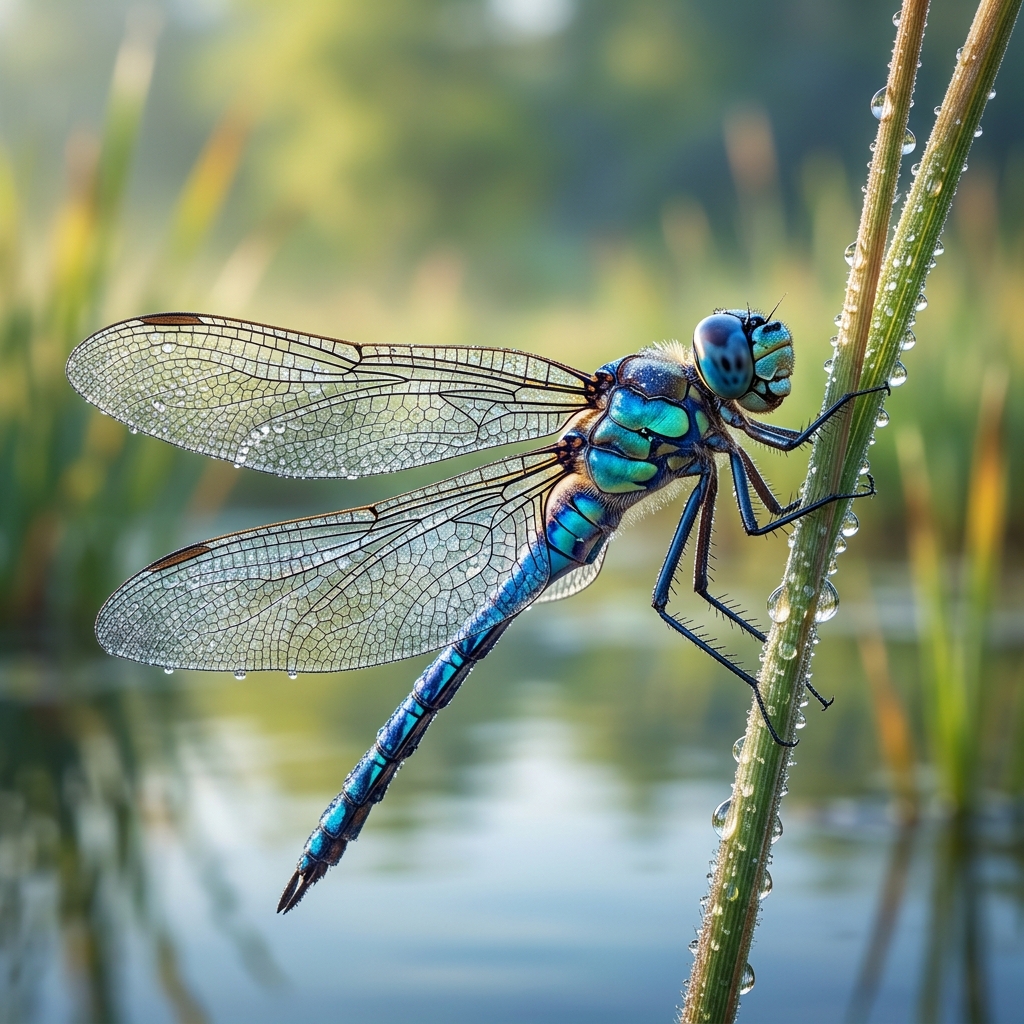
What are Neuroptera?
The order Neuroptera ("nerve-winged") contains approximately 6,000 species of lacewings, antlions, mantispids, and owlflies. Named for the complex network of veins in their transparent wings, these insects are primarily predatory — both as larvae and adults — making them invaluable allies in pest control.
Major Families
- Green lacewings (family Chrysopidae): Delicate green insects with golden eyes and gossamer wings. Adults feed on nectar and pollen, but their larvae ("aphid lions") are voracious predators — a single larva can consume 200+ aphids per week. Widely used in commercial biological pest control.
- Antlions (family Myrmeleontidae): Adults resemble delicate dragonflies with clubbed antennae. Larvae are famous for digging conical pit traps in sandy soil, lurking at the bottom with only their massive jaws exposed, and flicking sand at prey that tries to escape — earning them the name "doodlebugs."
- Mantispids (family Mantispidae): Remarkable convergent evolution — they independently evolved raptorial forelegs strikingly similar to praying mantises, despite being completely unrelated. Some species' larvae are parasitoids of spider egg sacs.
- Owlflies (family Ascalaphidae): Fast-flying aerial predators with large eyes and long, clubbed antennae. They look like a cross between a dragonfly and a butterfly and hunt insects on the wing at twilight.
- Spongillaflies (family Sisyridae): Tiny, rarely seen neuropterans whose larvae are aquatic parasites of freshwater sponges — one of the most unusual feeding strategies in the insect world.