What are Blattodea?
The order Blattodea unites cockroaches and termites — a surprising grouping confirmed by modern genetic studies showing that termites actually evolved from within the cockroach lineage. Cockroaches are among the most ancient insects, with fossils dating back over 300 million years, while termites have existed for approximately 150 million years.
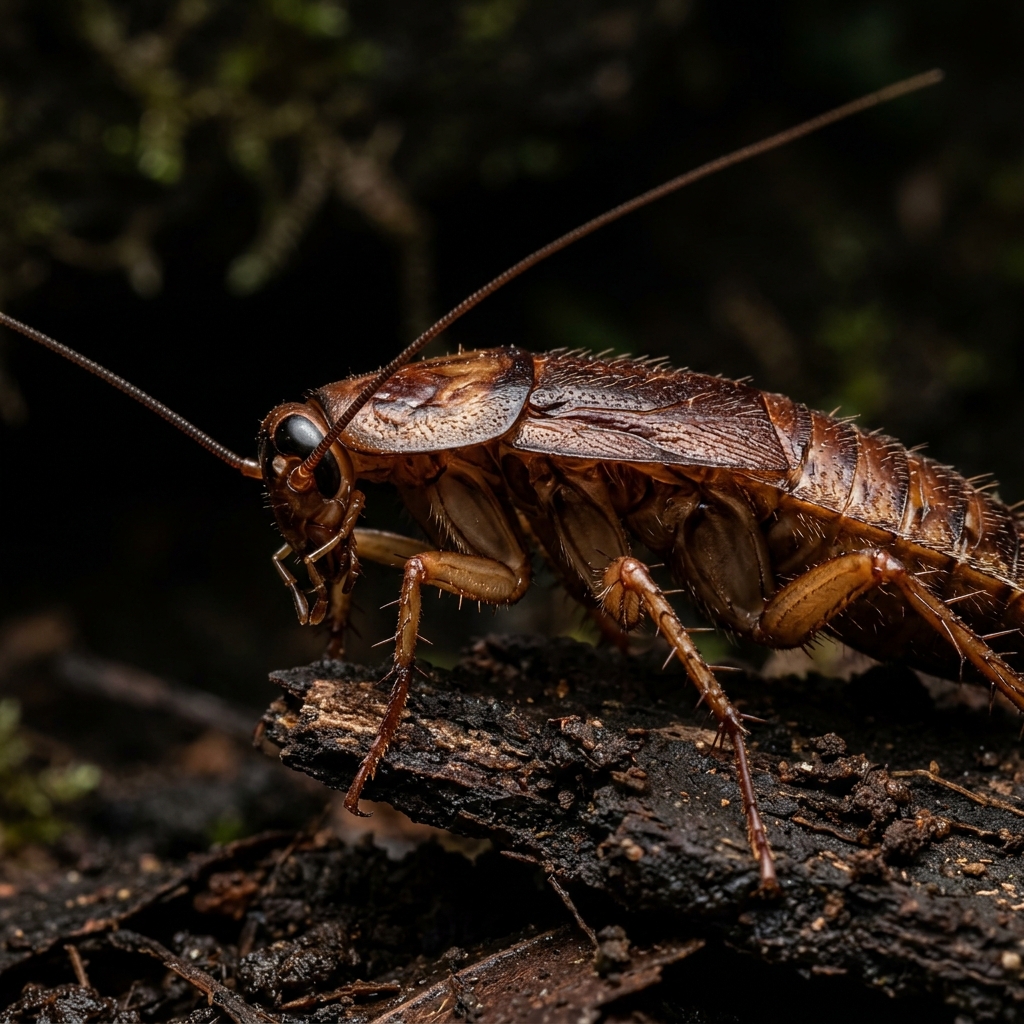
Cockroaches
Of the approximately 4,600 species of cockroaches, fewer than 30 are associated with human habitations. The vast majority are wild species playing vital ecological roles as decomposers in tropical forests. Cockroaches are remarkably resilient — they can survive without food for a month, hold their breath for 40 minutes, and withstand radiation levels 10 times greater than what would kill a human.
- Madagascar hissing cockroach (Gromphadorhina portentosa): One of the largest cockroach species at up to 7.5cm. Unlike most insects, they produce sound by forcing air through their spiracles (breathing holes), creating a distinctive hissing noise used in courtship and territorial disputes. Males engage in head-butting contests for dominance. Popular as pets and in scientific research due to their docile nature.
- American cockroach (Periplaneta americana): Despite its name, originally from Africa. The largest common household species, growing up to 5cm. Can fly short distances in warm conditions.
- German cockroach (Blattella germanica): The most common household pest cockroach worldwide. A single pair can produce up to 400,000 descendants in a year.
- Oriental cockroach (Blatta orientalis): Also called "water bugs," preferring cool, damp environments like basements and drains.
Termites
Termites are eusocial insects that evolved from cockroach ancestors. Often called "white ants," they are not related to ants at all. Termites are among the most successful organisms on Earth — their combined biomass exceeds that of all humans, and in tropical regions, their activities fundamentally shape ecosystems.
Termite colonies are organized into castes: a queen (who can live 30-50 years and produce 30,000 eggs per day), a king, workers, and soldiers. Some species build extraordinary mounds over 8 meters tall with sophisticated ventilation systems that maintain precisely controlled internal temperatures and humidity — biological air conditioning that has inspired architectural innovation.
- Subterranean termites: The most economically destructive group. Build underground colonies connected to food sources by mud tubes. Cause an estimated $5 billion in damage annually in the US alone.
- Drywood termites: Live entirely inside dry wood with no soil contact. Form smaller colonies but can silently destroy furniture, framing, and structural timbers.
- Dampwood termites: Require high moisture content in wood. Usually found in forests rather than structures.
- Fungus-growing termites (Macrotermitinae): Cultivate specialized fungi in underground gardens — independently inventing agriculture, similar to leafcutter ants.