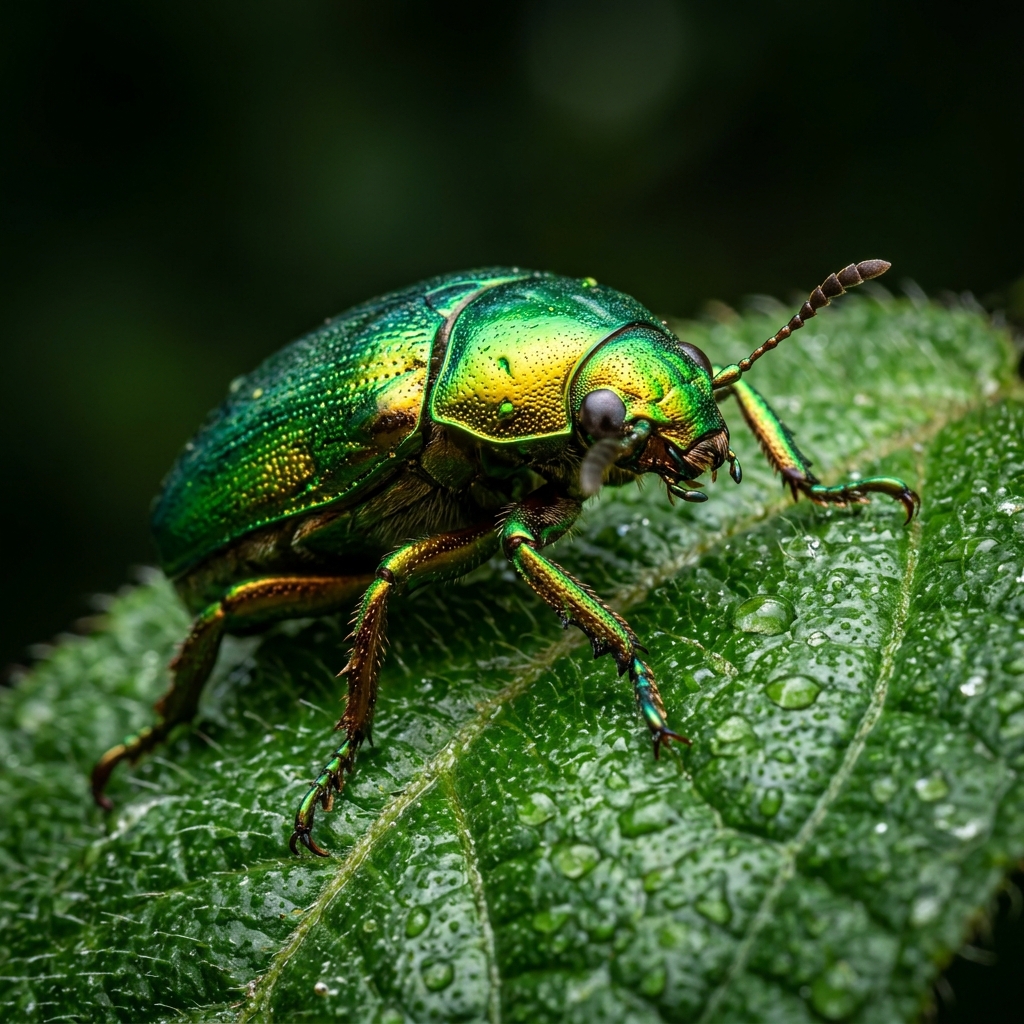
Beetles
Look for hardened wing covers (elytra) that meet in a straight line down the back. Strong chewing mouthparts.
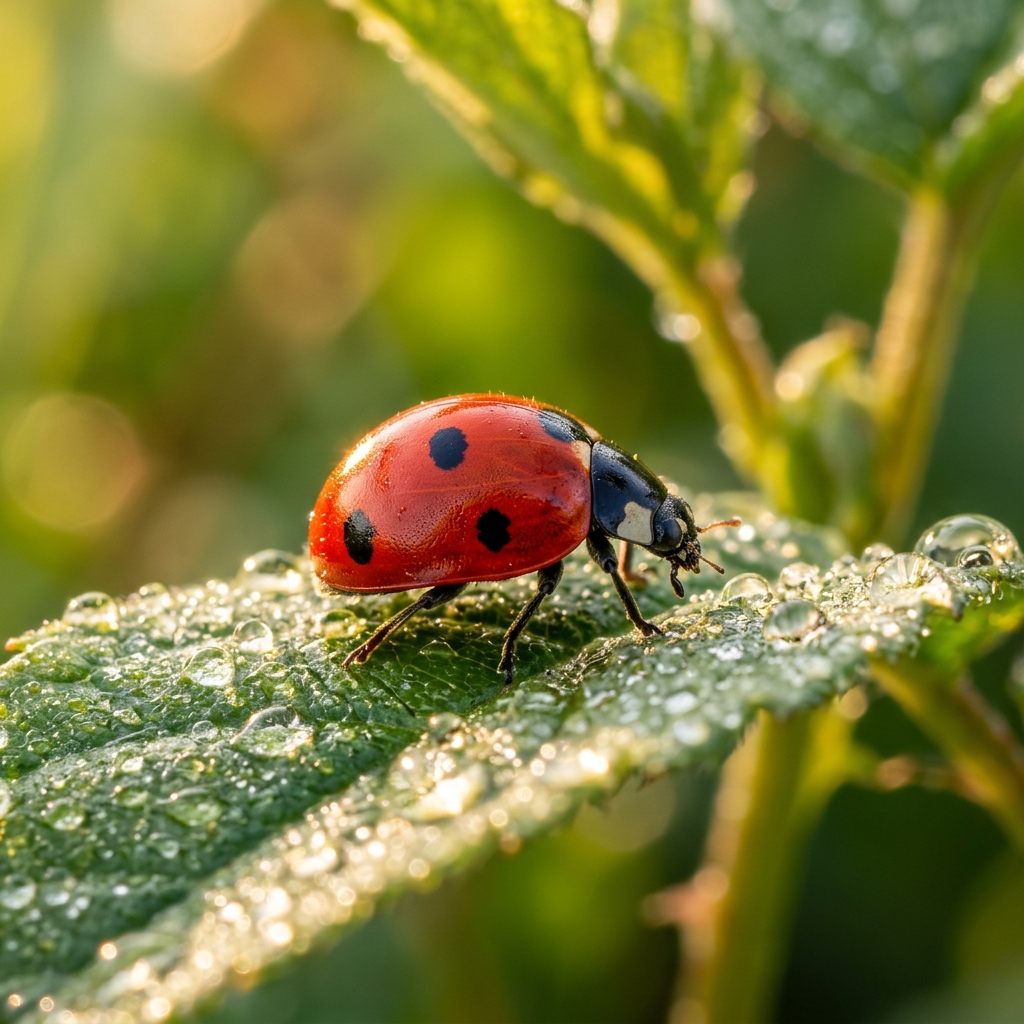
Ladybirds
Small, dome-shaped body. Bright red, orange, or yellow with black spots. Beneficial predators that eat aphids and scale insects.
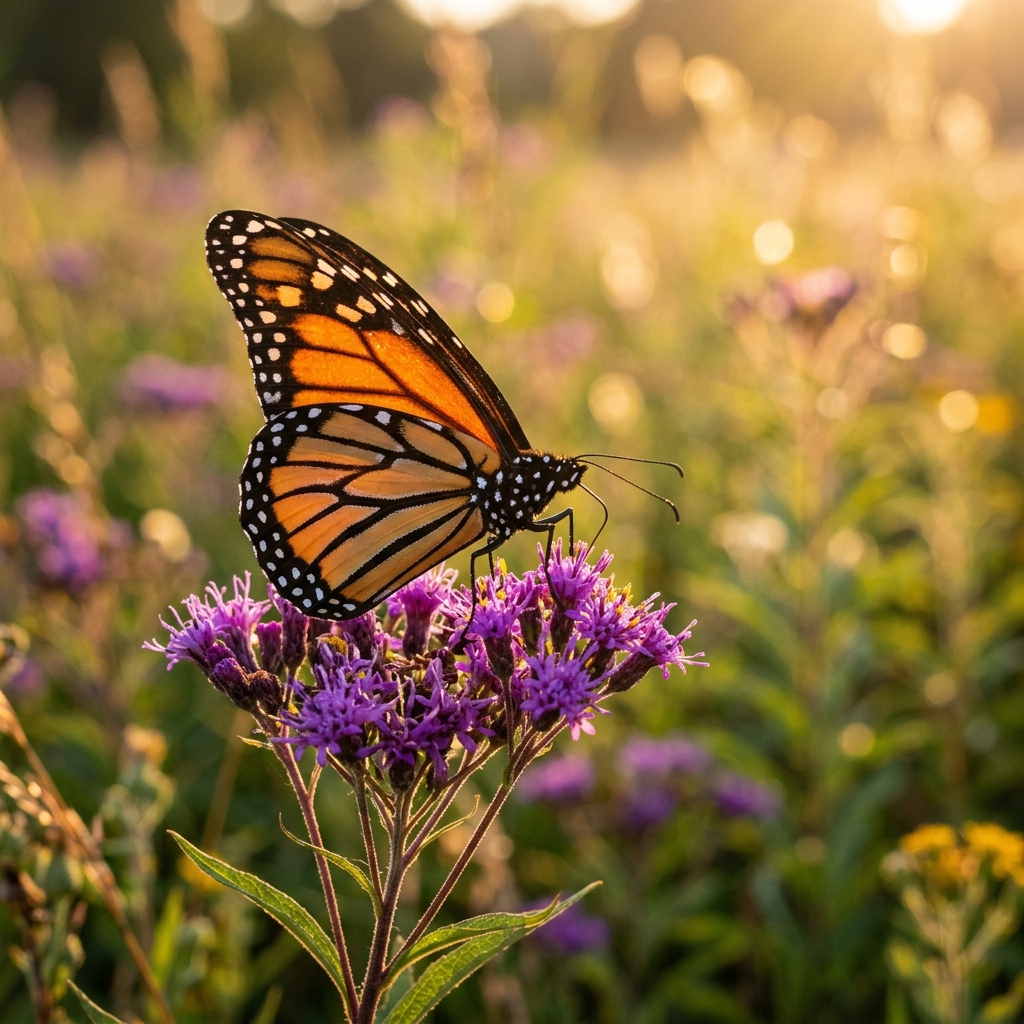
Butterflies
Two pairs of large, colorful wings covered in tiny scales. Club-tipped antennae. Active during daytime. Complete metamorphosis.
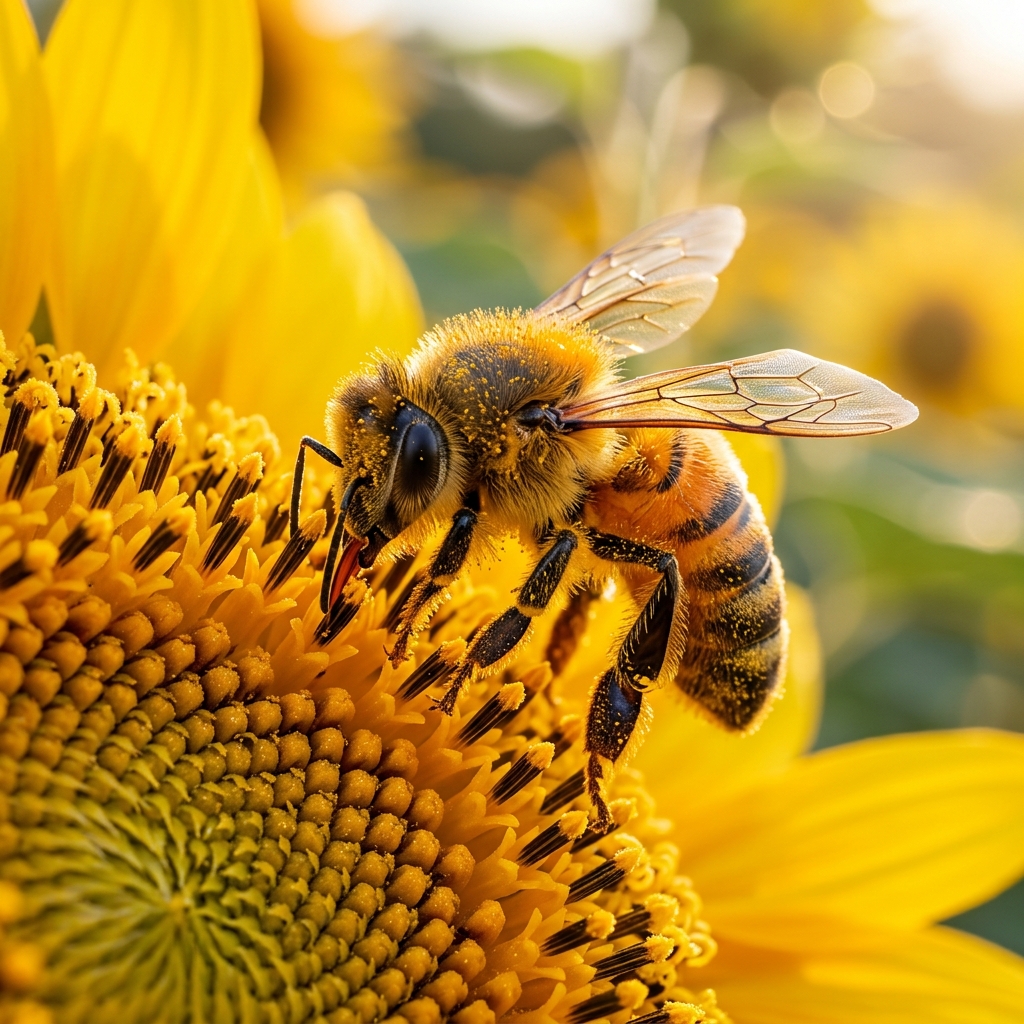
Bees
Fuzzy, pollen-collecting body. Two pairs of transparent wings hooked together. Narrow waist between thorax and abdomen.
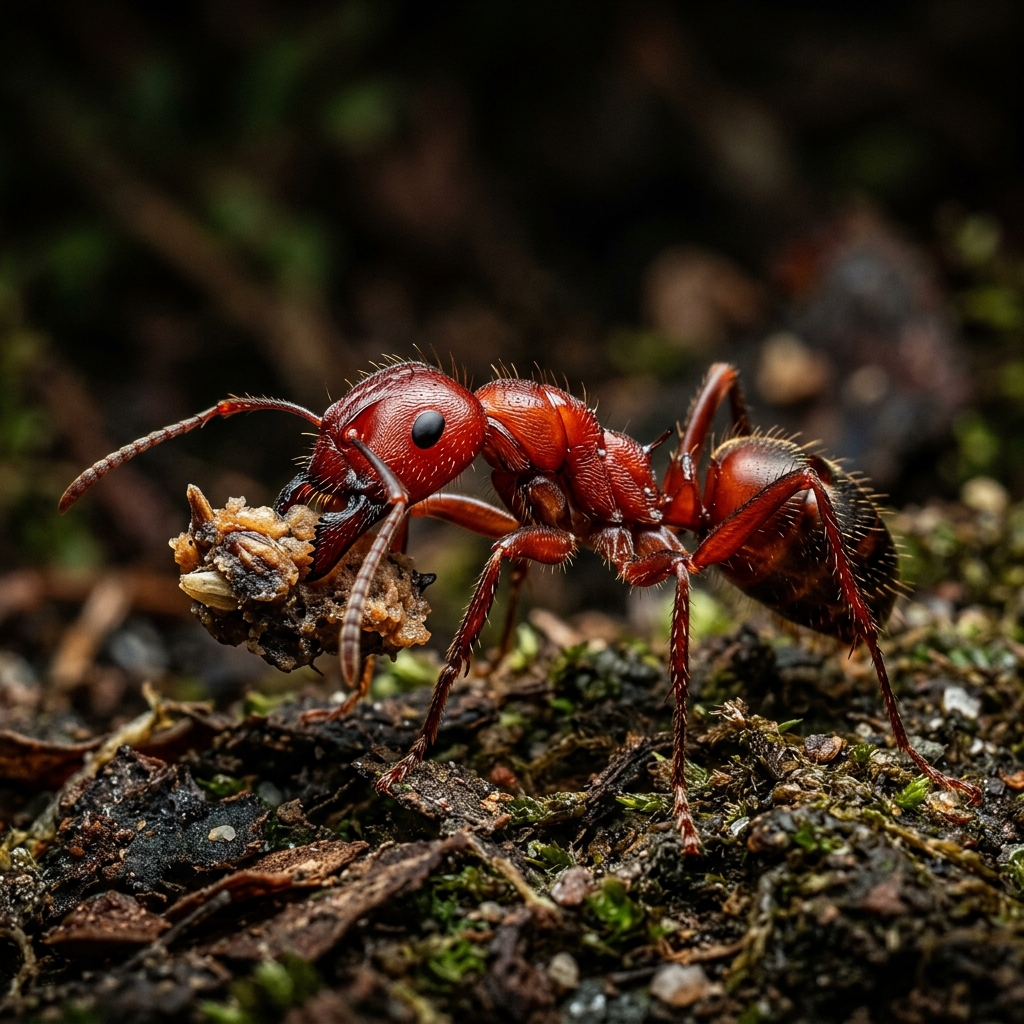
Ants
Small with elbowed antennae. Narrow petiole (waist) between thorax and abdomen. Usually wingless; social colony structure.
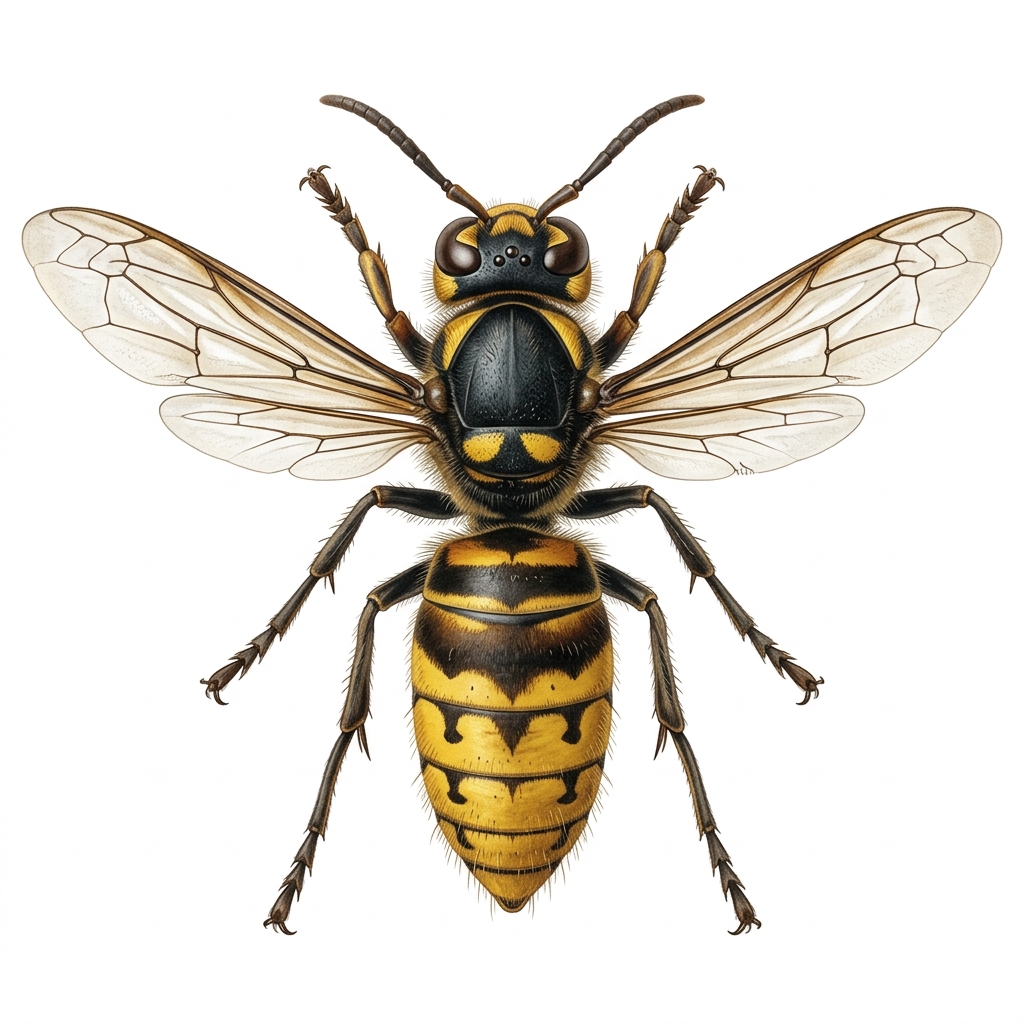
Hornets
Largest of the social wasps. Smooth, shiny body with yellow/orange and black markings. Build large papery nests. Powerful sting.
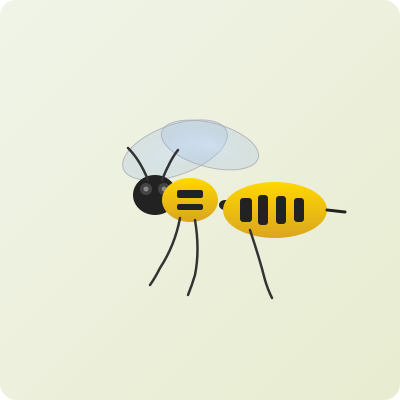
True Wasps
Slender body with distinct narrow waist. Smooth, hairless with bright yellow and black stripes. Build paper nests. Both predators and scavengers.
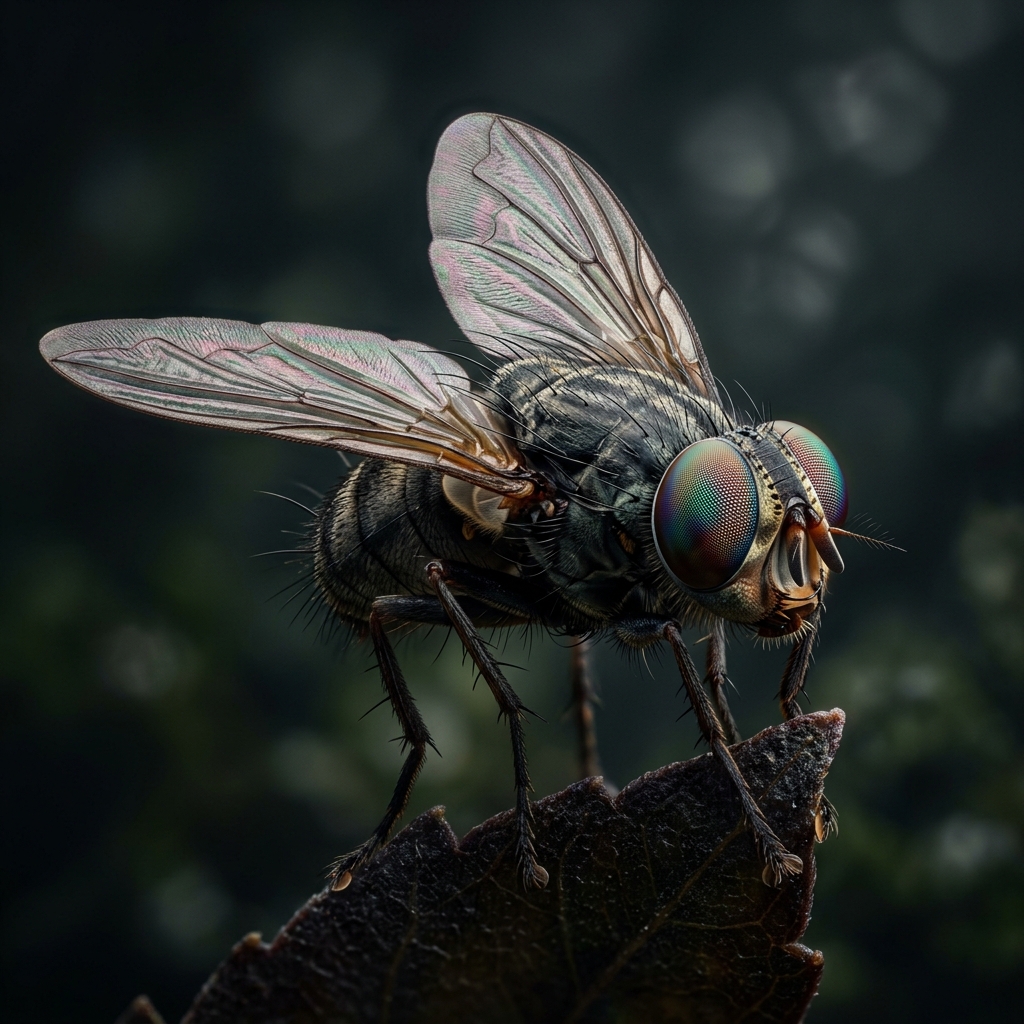
True Flies
Only ONE pair of wings (key feature). Large compound eyes. Small club-shaped halteres behind wings for balance.
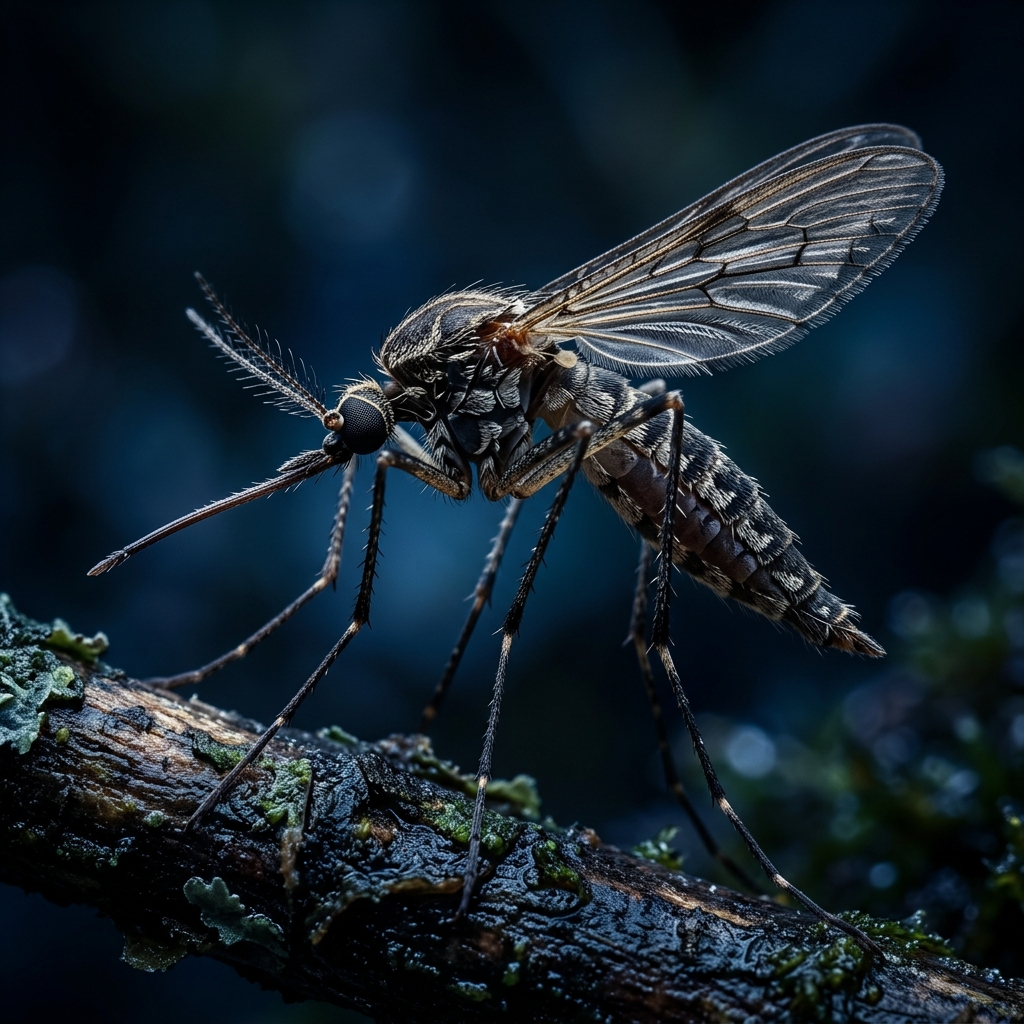
Mosquitoes
Slender body with long legs. Distinctive long proboscis for piercing. Scales on wing veins. Characteristic high-pitched buzz.
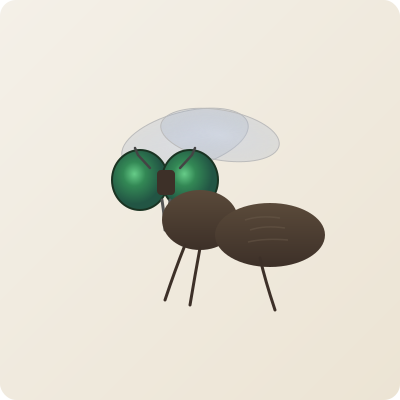
Horse-fly
Large, stocky flies with huge iridescent compound eyes. Females inflict painful bites to feed on blood. Strong, persistent fliers.
True Bugs
Piercing-sucking mouthparts forming a beak. Front wings half-hardened (hemelytra) creating an X-pattern when folded. Shield-shaped body common.
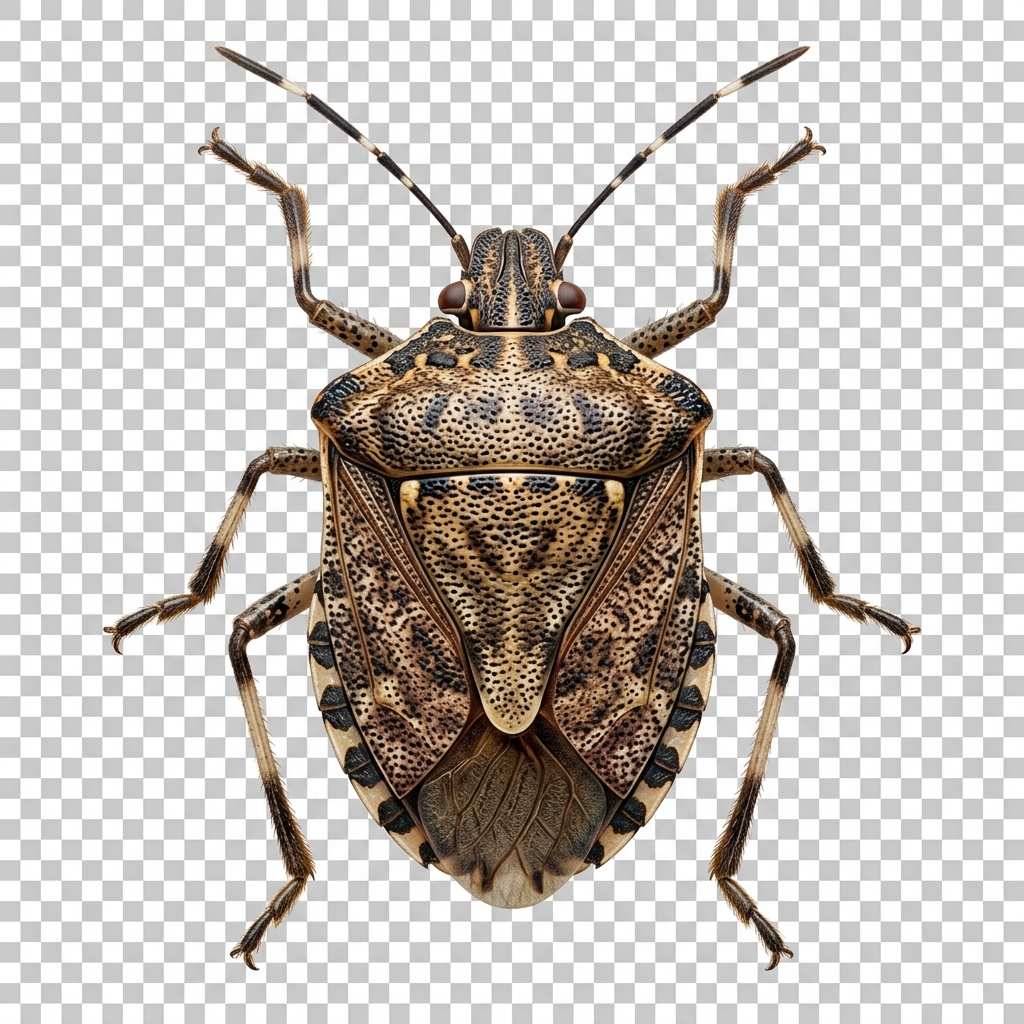
Brown Marmorated Stink Bug
Shield-shaped with mottled brown marbling. White-banded antennae and leg segments. Releases foul odor when disturbed. Major crop pest.
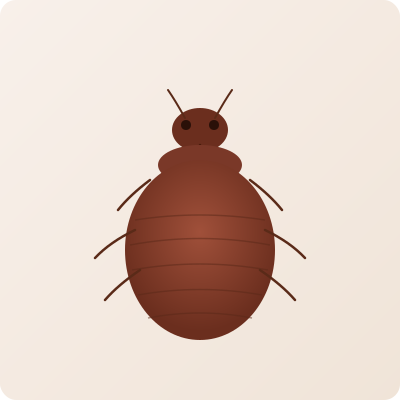
Bed Bug
Flat, oval, reddish-brown body (5-7mm). Wingless. Nocturnal blood-feeder hiding in mattress seams and crevices. Leaves itchy bite marks.
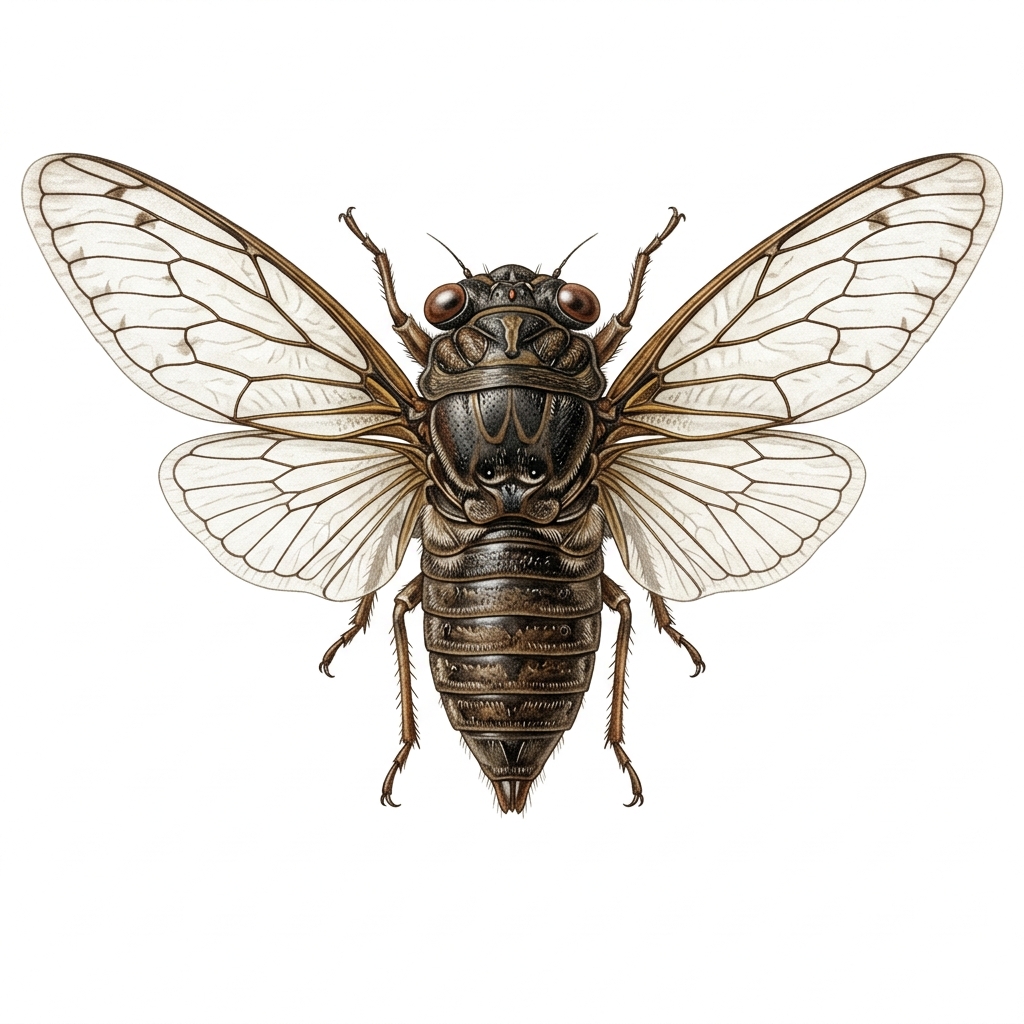
Cicadas
Stout body with large transparent wings. Males produce extremely loud buzzing songs using tymbals. Nymphs live underground for years.
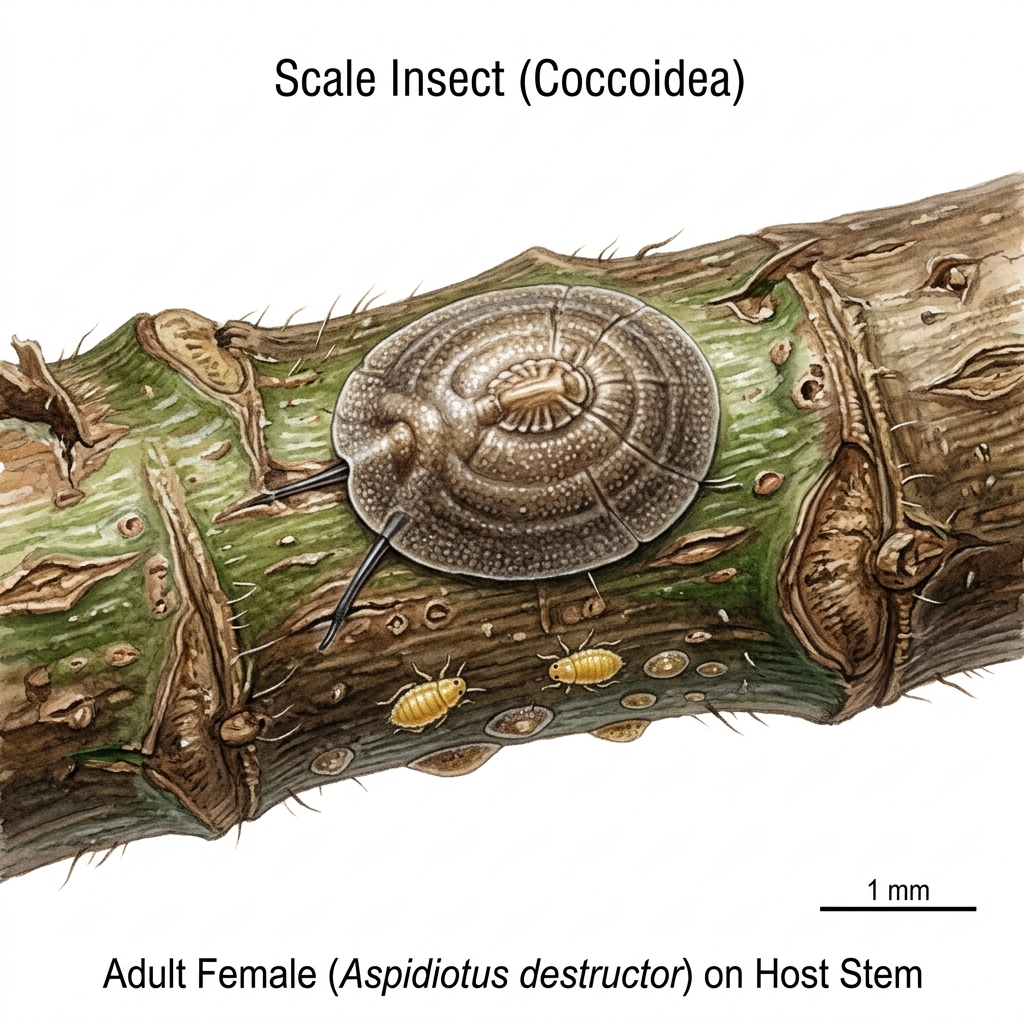
Scale Insects
Tiny, immobile sap-feeders covered in a waxy or armored scale. Females lose legs and antennae as adults. Serious plant pests worldwide.
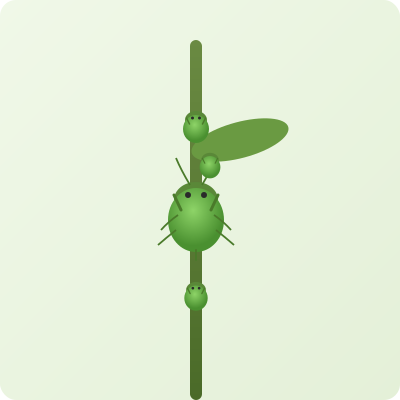
Aphids
Tiny, soft-bodied, pear-shaped sap-suckers. Two cornicles (tubes) projecting from abdomen. Can reproduce asexually at astounding rates.
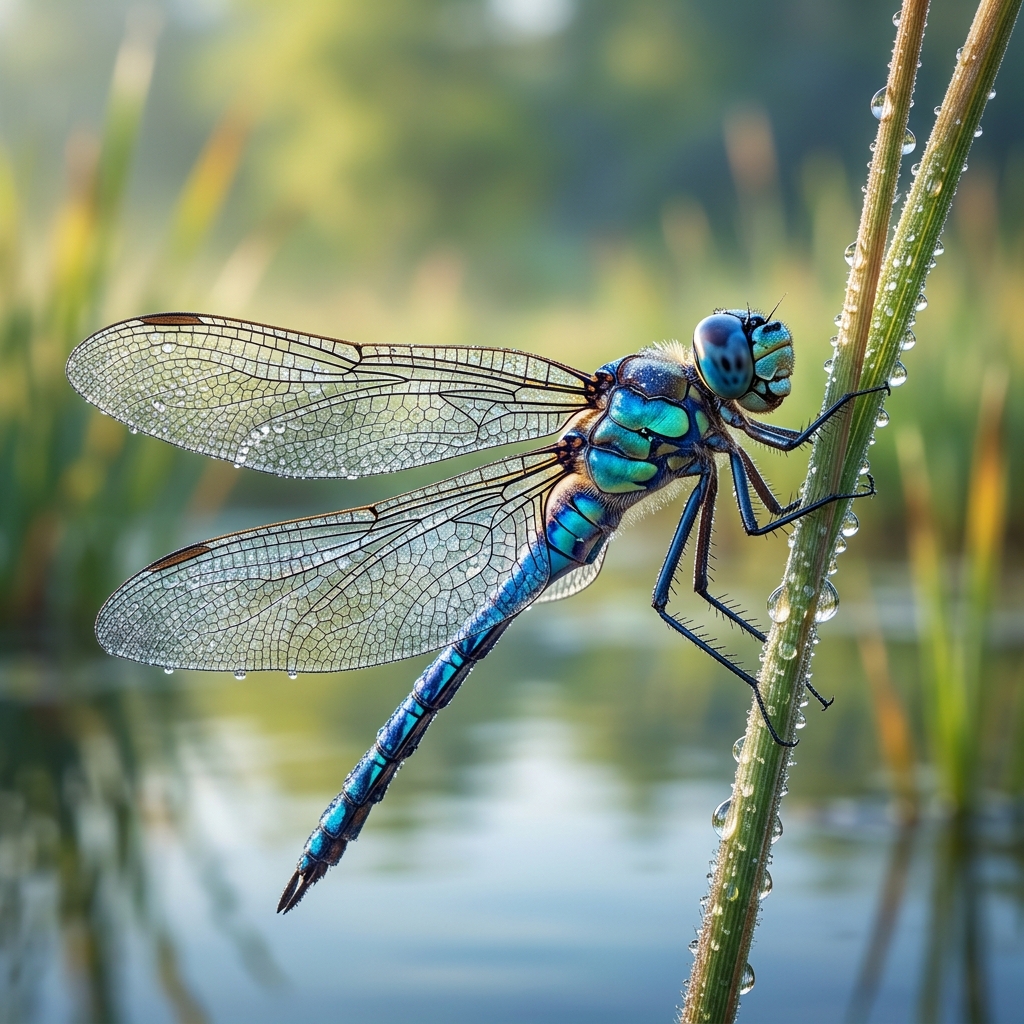
Dragonflies & Damselflies
Large eyes nearly touching. Four long transparent wings held horizontally at rest. Long slender abdomen. Powerful, agile fliers near water.
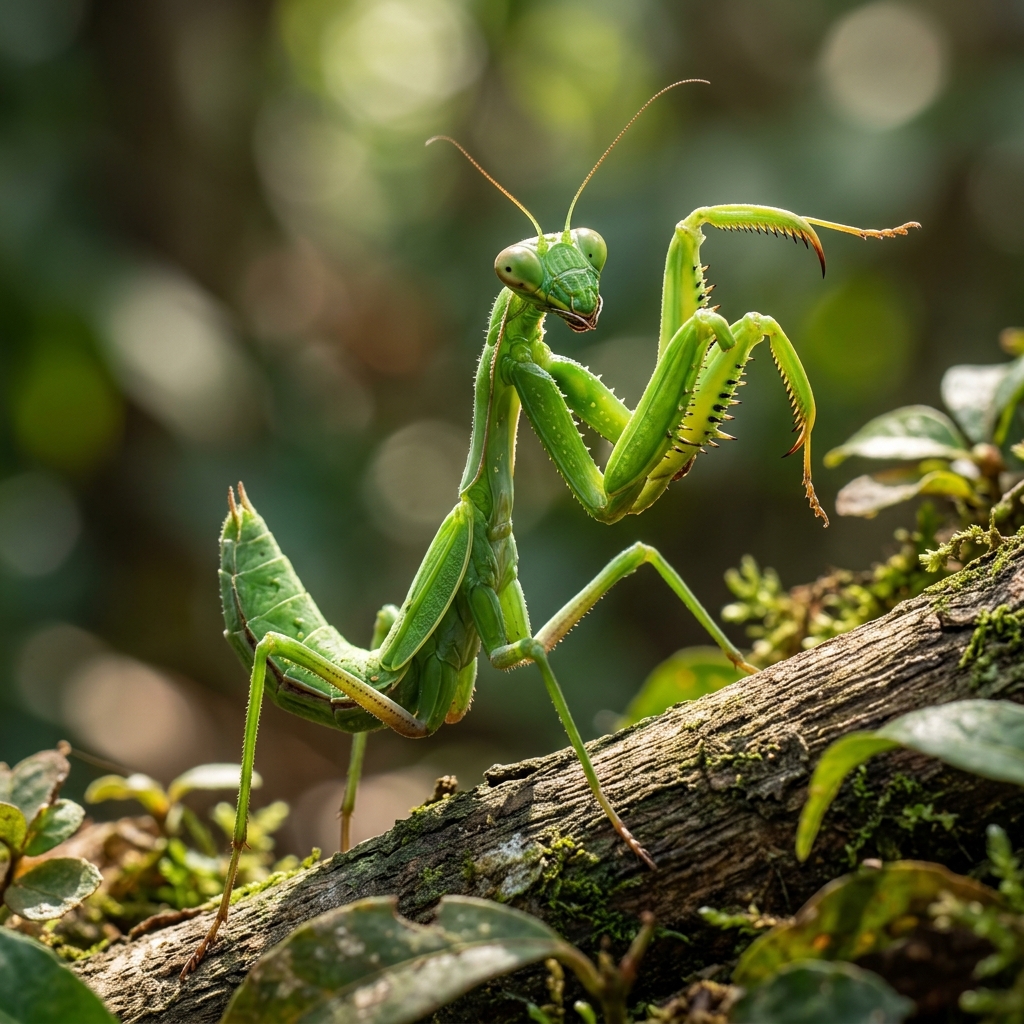
Praying Mantis
Triangular head that can rotate 180°. Raptorial forelegs held in "praying" position. Elongated body. Large compound eyes.
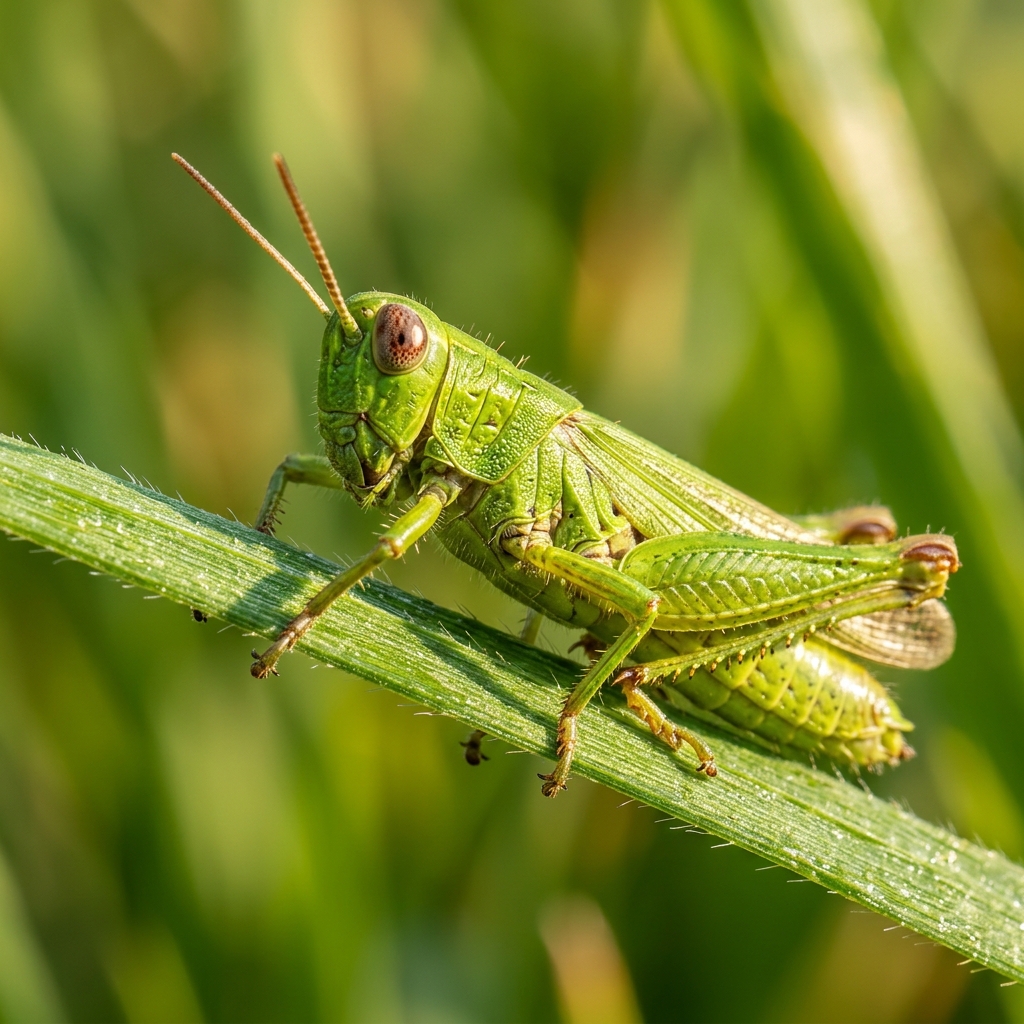
Grasshoppers (Caelifera)
Powerful enlarged hind legs for jumping. Short antennae (shorter than body). Leathery forewings. Produce sounds by rubbing legs against wings.
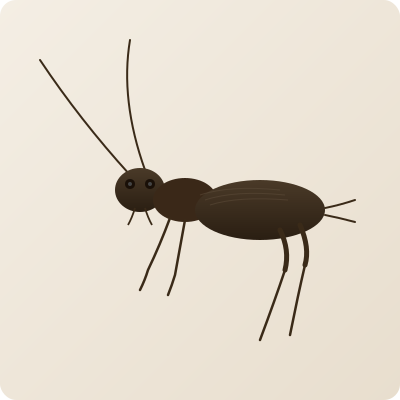
True Crickets
Cylindrical body with long antennae (longer than body). Males chirp by rubbing wings together. Mostly nocturnal. Strong jumping hind legs.
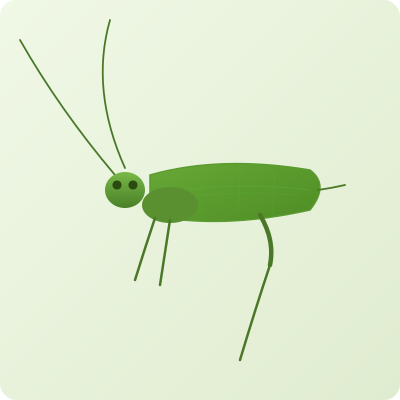
Bush Crickets (Katydids)
Very long antennae. Large, leaf-shaped wings providing camouflage. Many species mimic leaves or bark. Loud nighttime chorus in forests.
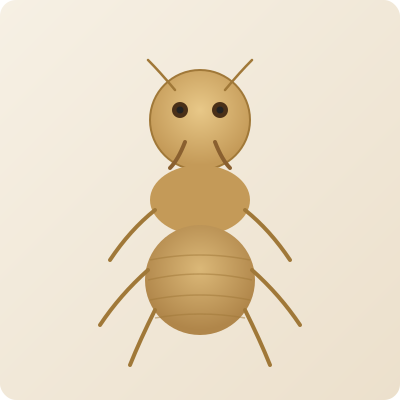
Jerusalem Crickets
Large, bald, round head resembling a human face. Stout wingless body. Powerful burrowing legs. Found in western Americas. Can deliver a painful bite.
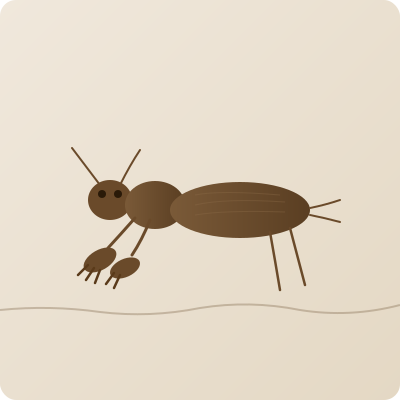
Mole Crickets
Shovel-like forelegs adapted for digging. Cylindrical, velvety body. Live underground in burrows. Males sing from specially shaped burrow entrances.
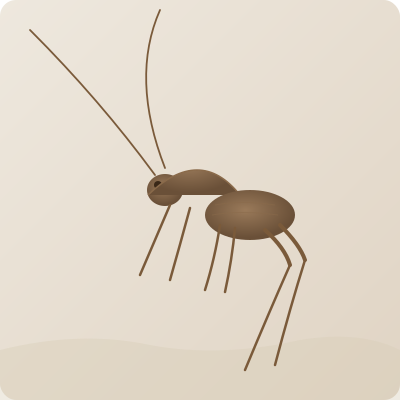
Camel Crickets
Distinctive humped back. Very long hind legs and antennae. Wingless and silent (no chirping). Found in caves, basements, and under stones.
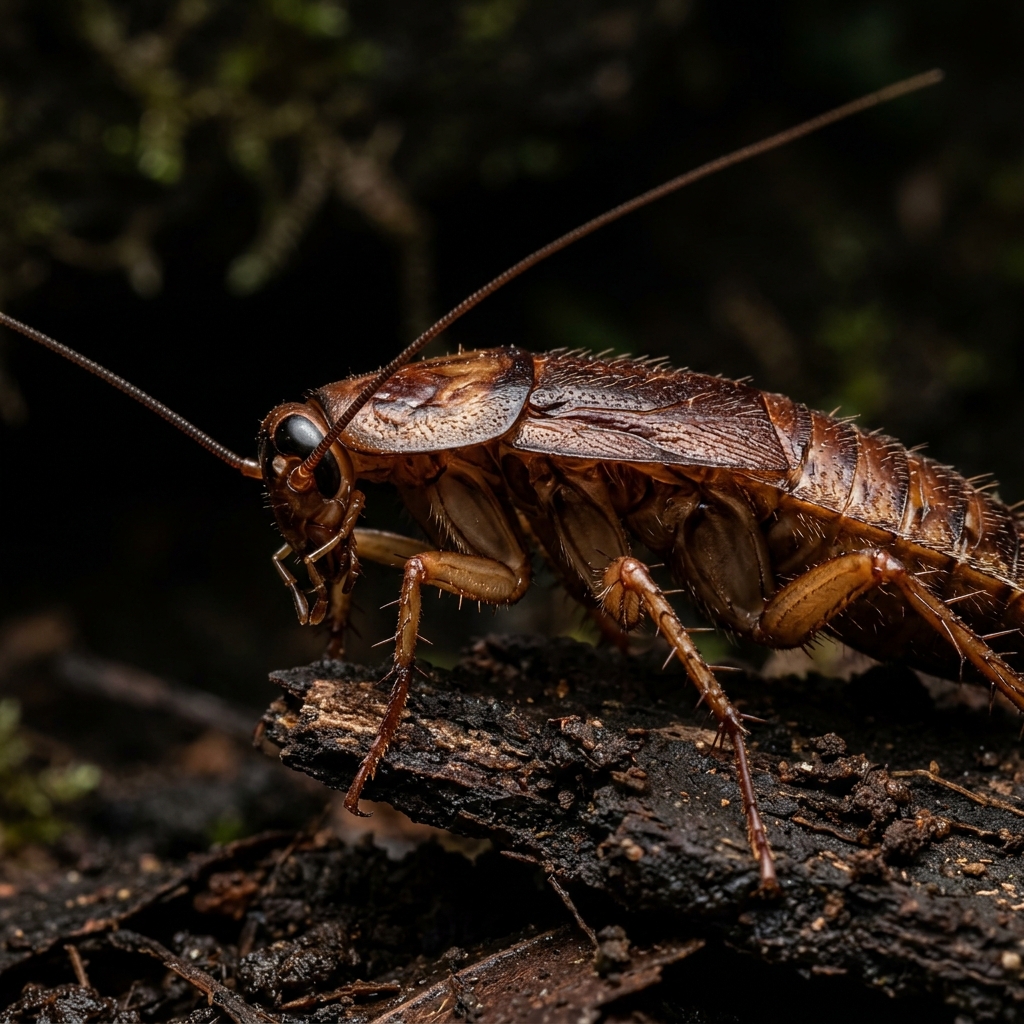
Cockroaches
Flat, oval body. Long antennae. Six spiny legs. Fast runners. Most species are nocturnal. Some species can fly.
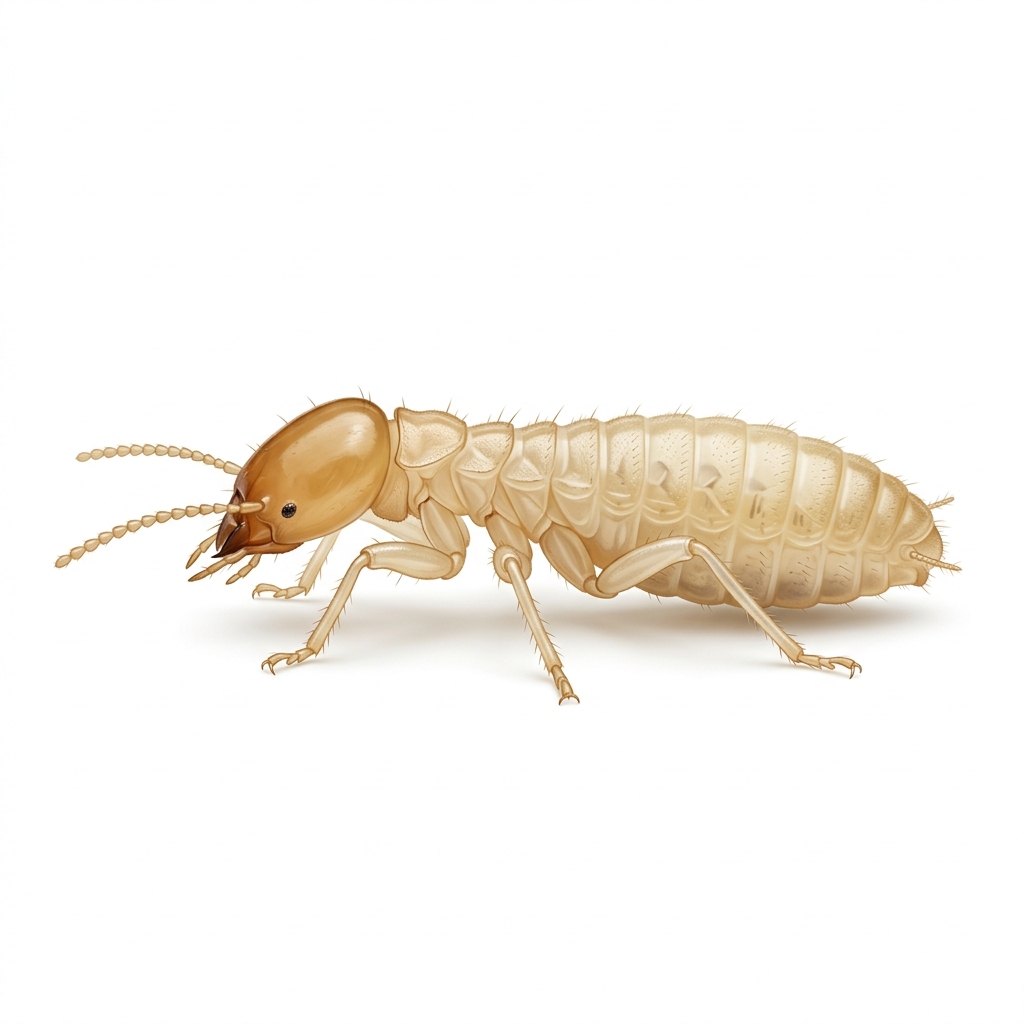
Termites
Soft, pale body with straight bead-like antennae. Highly social with castes (workers, soldiers, queen). Feed on wood and cellulose. Build massive mounds.
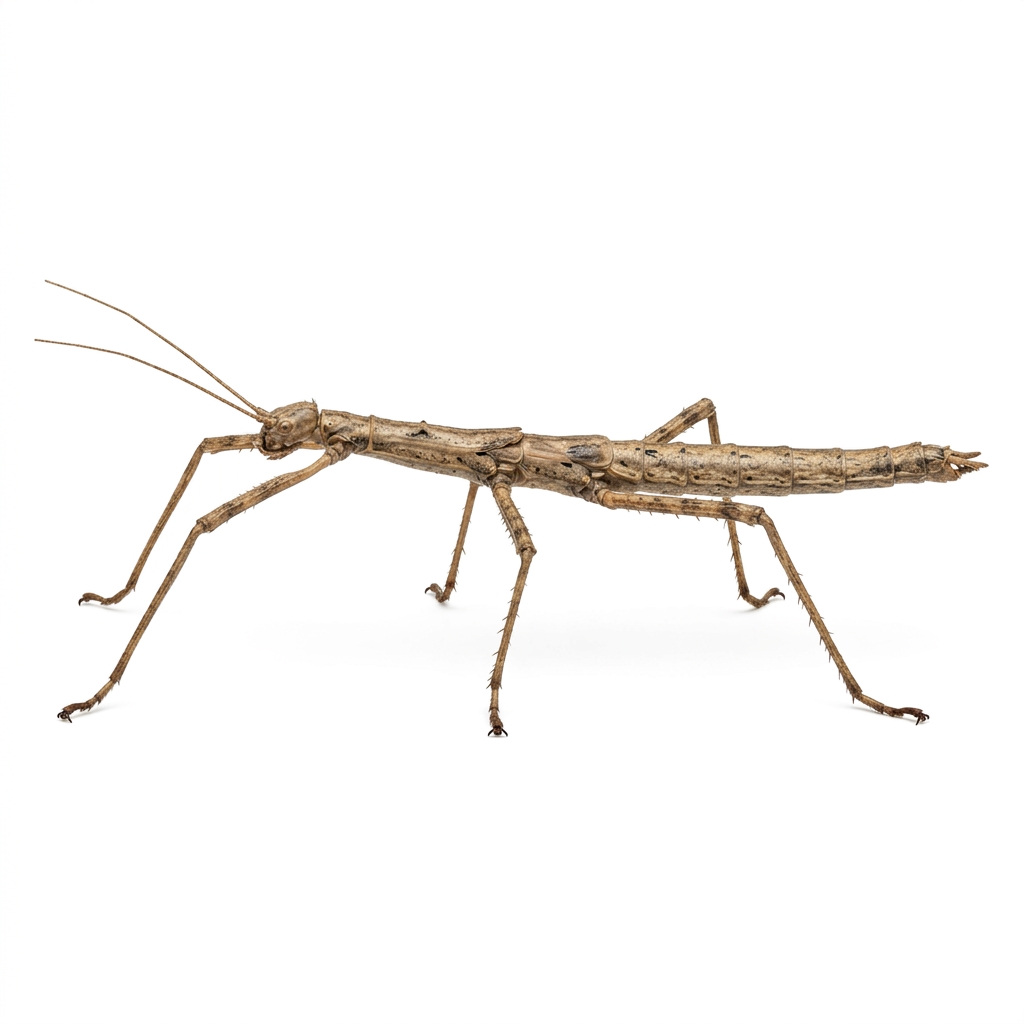
Phasmids (Stick Insects)
Masters of camouflage — elongated body perfectly mimics twigs and branches. Very long, thin legs. Slow, deliberate movements. Mostly herbivorous.
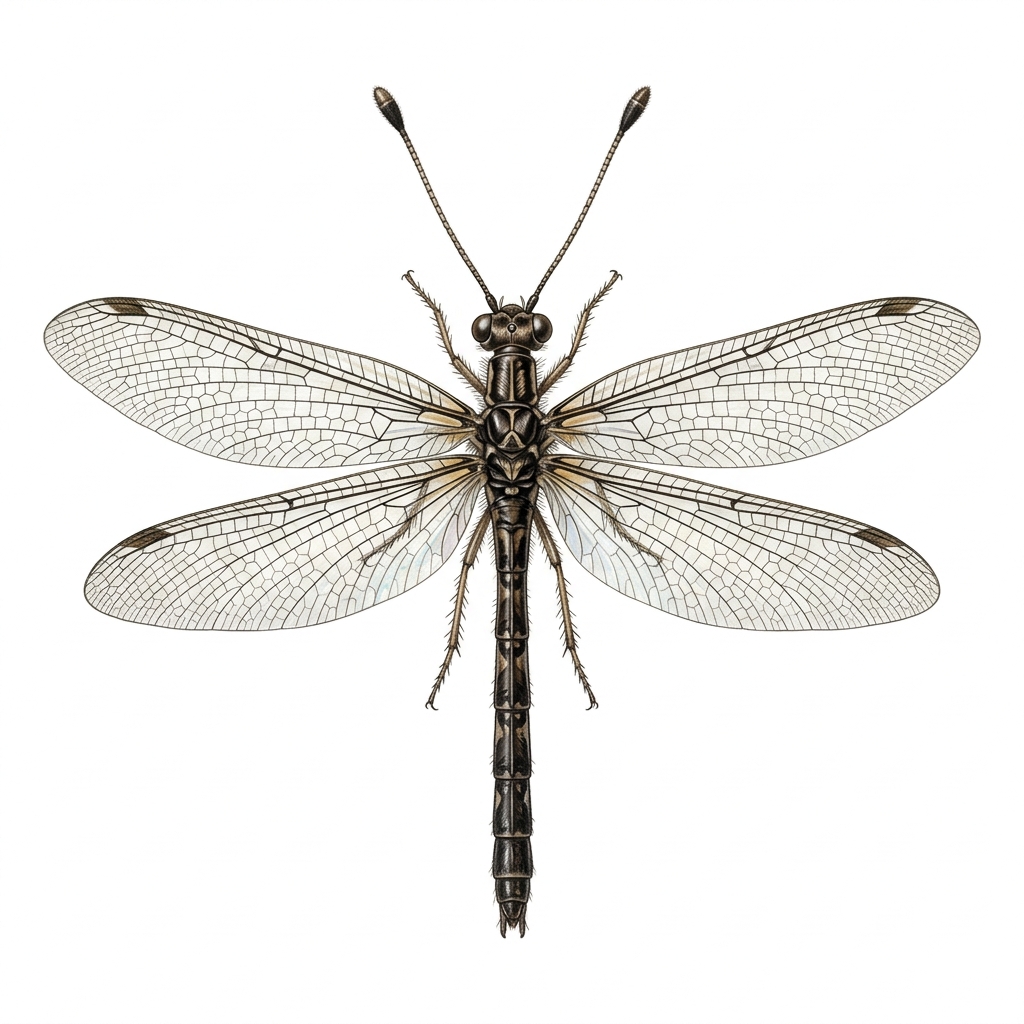
Antlions
Adults resemble damselflies with clubbed antennae. Larvae are famed for digging cone-shaped sand pit traps to catch ants and other prey.
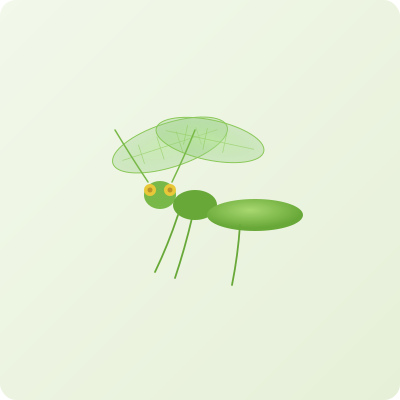
Net-winged Insects
Delicate insects with intricate, lace-like wing venation. Green lacewings have golden eyes and are beneficial predators of aphids and other pests.
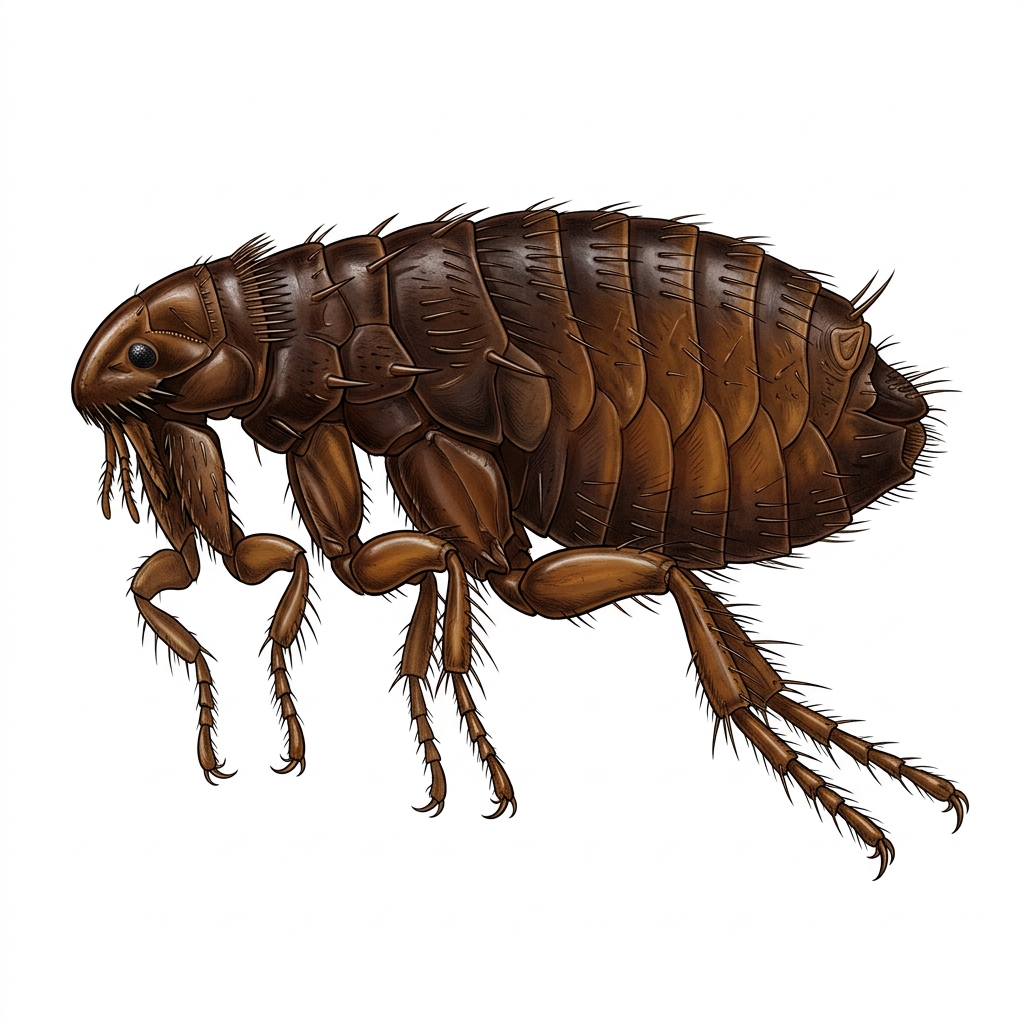
Fleas
Tiny, laterally compressed body. Powerful jumping legs that can leap 150× body length. Wingless blood-feeding parasites of mammals and birds.
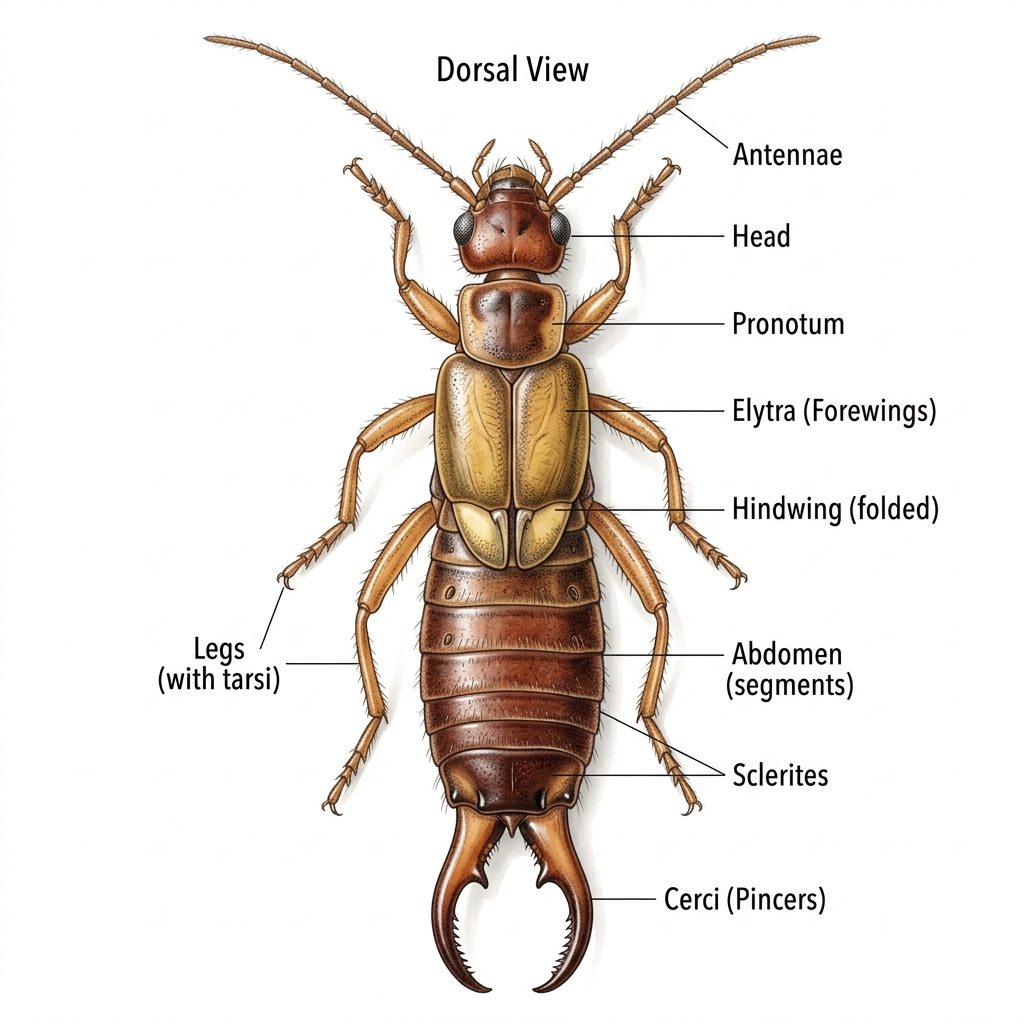
Earwigs
Elongated body with prominent pincers (cerci) at abdomen tip. Intricately folded hindwings beneath tiny forewings. Nocturnal. Show maternal care.
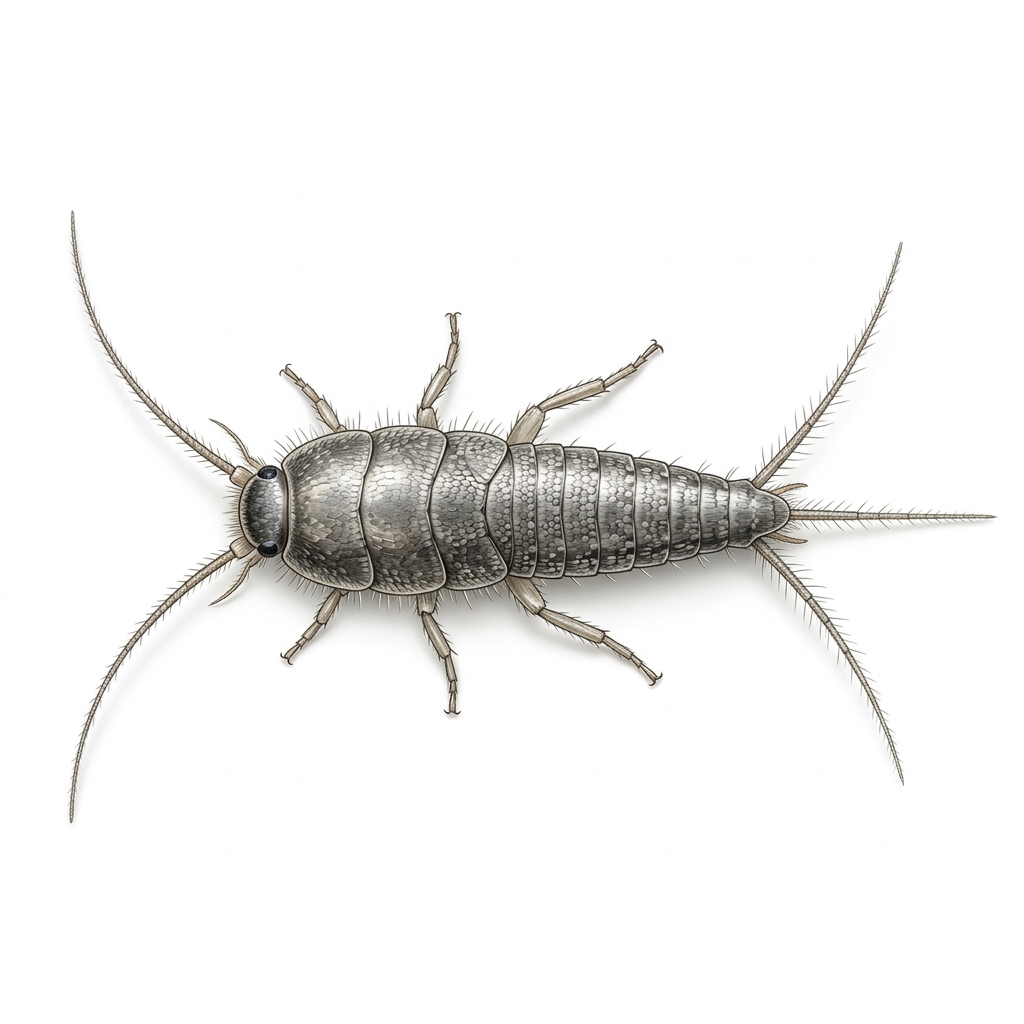
Silverfish
Carrot-shaped body covered in silvery scales. Three long tail filaments. Wingless primitives. Feed on starchy materials — paper, glue, wallpaper.
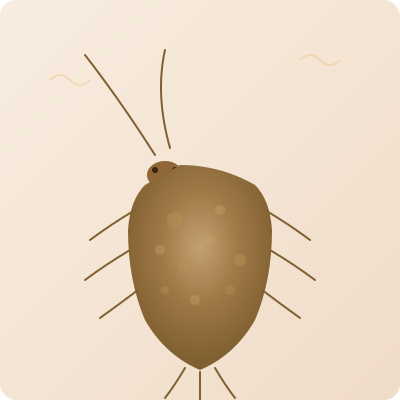
Firebrat
Similar to silverfish but mottled brown/tan. Prefers hot environments (32-41°C) near ovens, furnaces, and bakeries. Three tail filaments. Fast-moving.
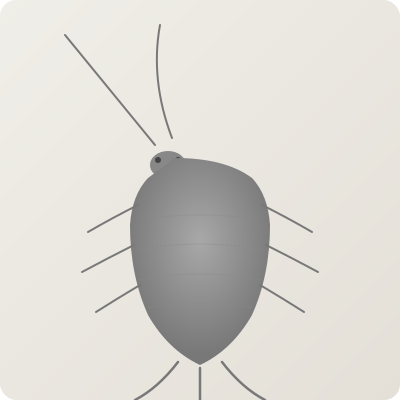
Long-tailed Silverfish
Longer tail appendages than common silverfish. Uniform grey coloring. Increasingly invasive household pest in Northern Europe. Thrives in modern insulated buildings.
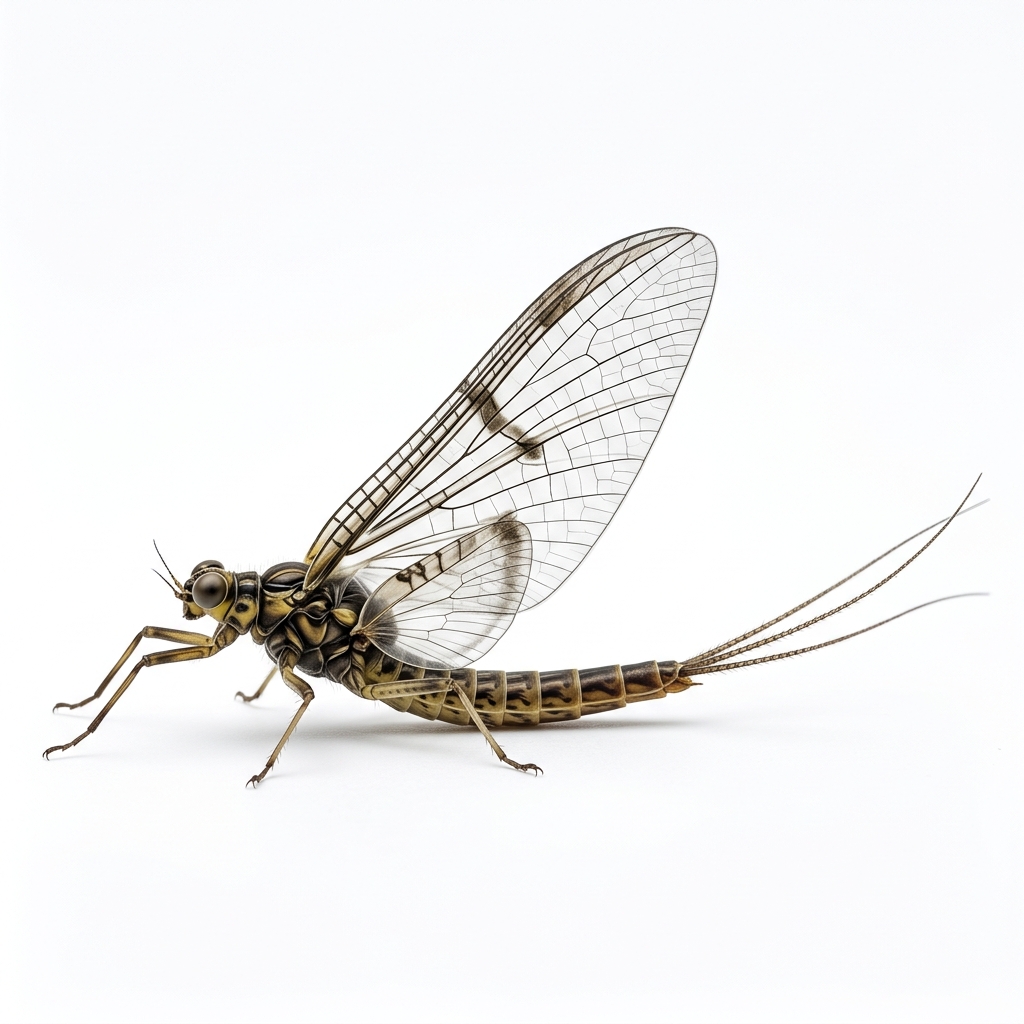
Mayflies
Delicate wings held upright at rest. 2-3 very long tail filaments. Adults live only hours to days. The only insects that molt after gaining wings.
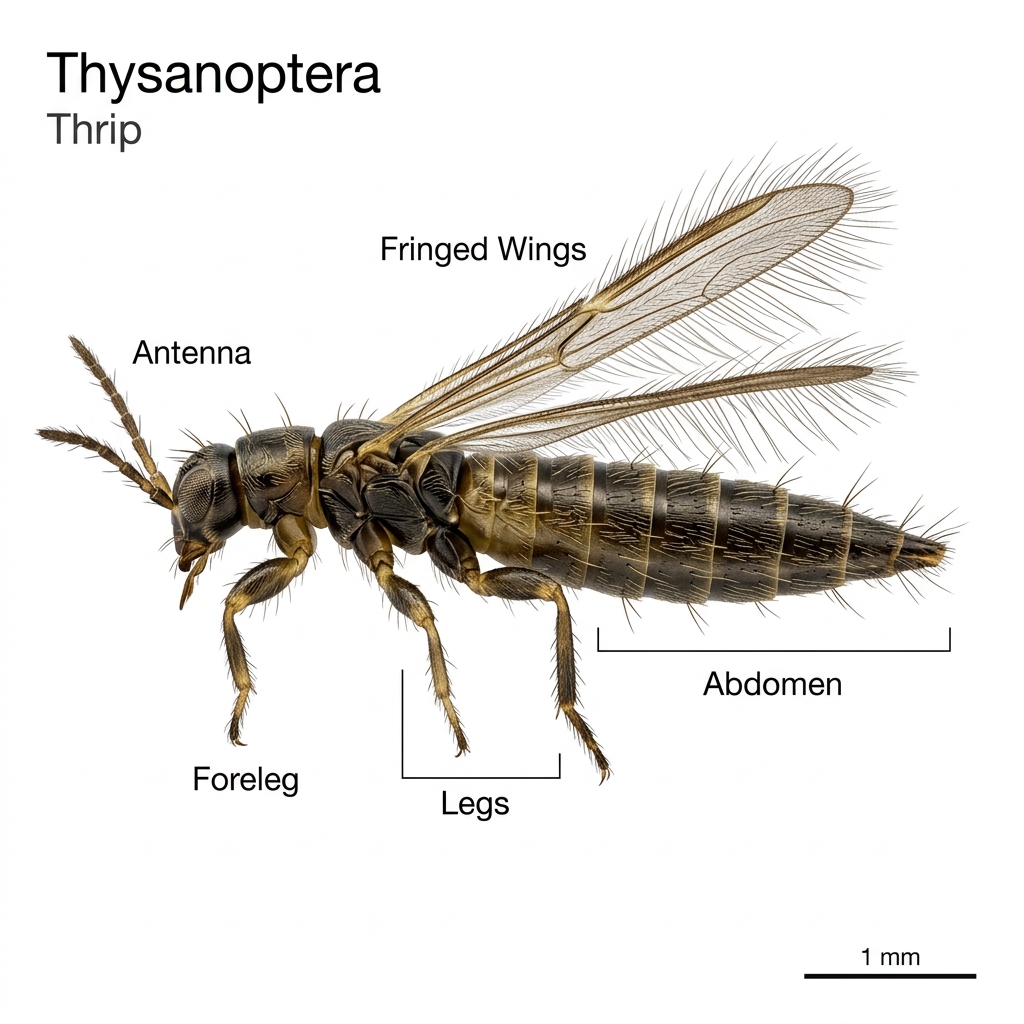
Thrips
Tiny (1-2mm) with unique fringed wings. Scrape and suck plant cell contents causing silvery scarring. Only one functional mandible. Major crop pests.
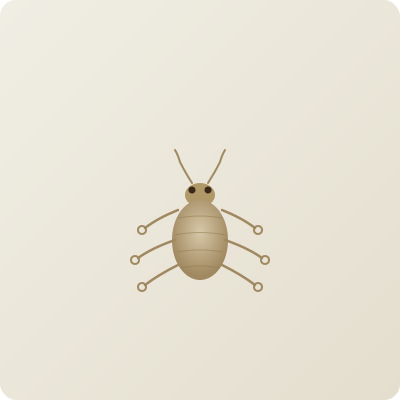
Lice
Small, flat, wingless ectoparasites. Clinging legs adapted to grip hair or feathers. Highly host-specific. Some transmit diseases like typhus.
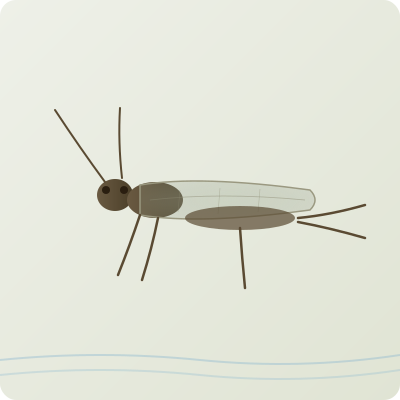
Stoneflies
Soft-bodied with wings folded flat over the body. Two long cerci. Found near clean, cold streams. Excellent bioindicators of water quality.
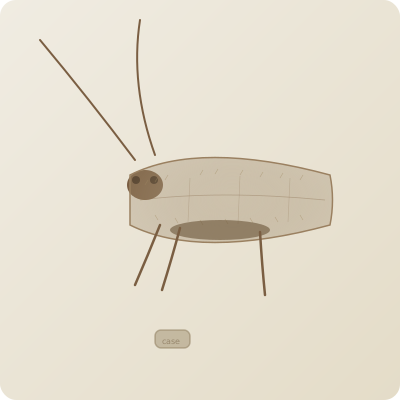
Caddisflies
Moth-like insects with hairy (not scaled) wings. Larvae are aquatic and build portable cases from silk, sand, and plant material. Water quality indicators.
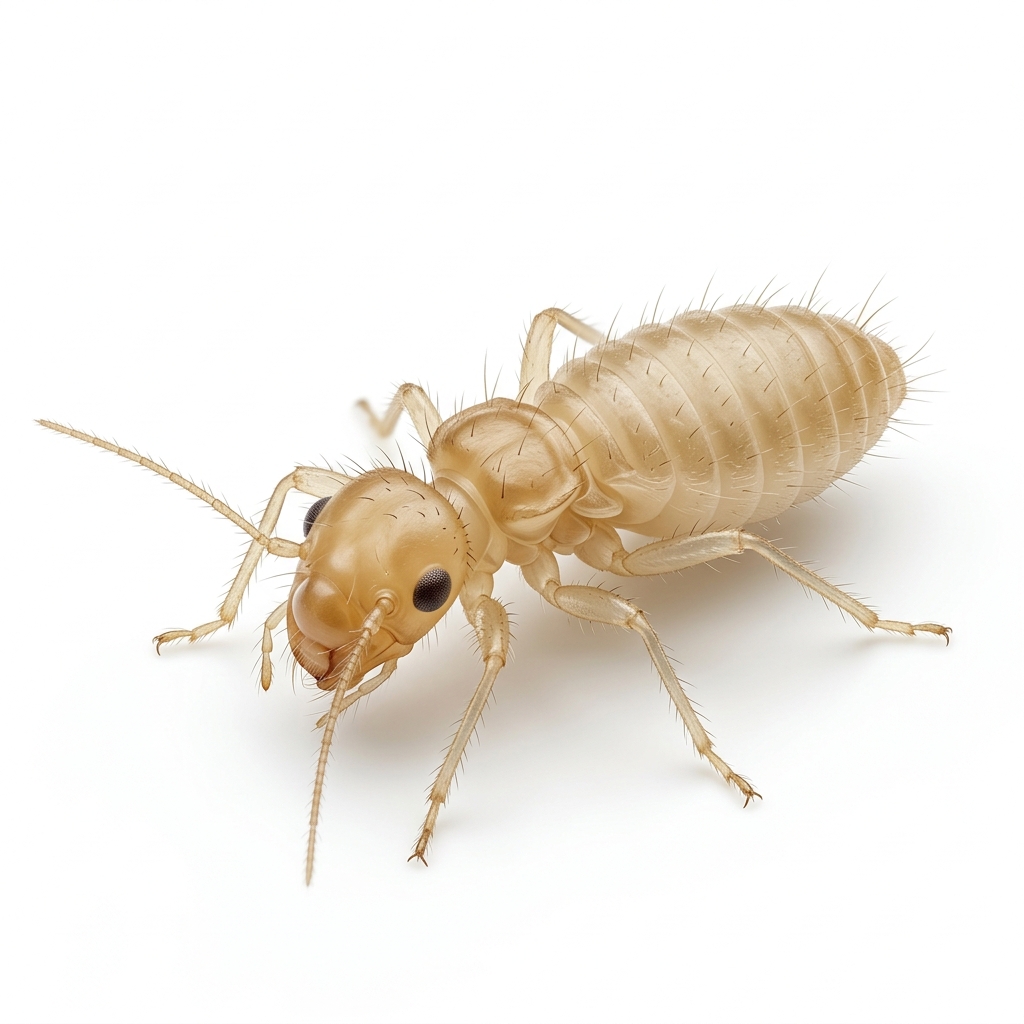
Booklice (Psocids)
Tiny (1-2mm) with disproportionately large head. Feed on microscopic molds and fungi. Thrive in damp conditions. Can damage old books and stored food.
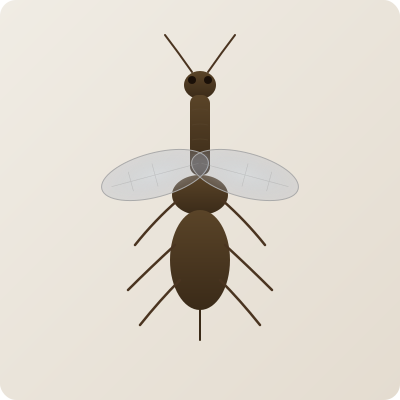
Snakeflies
Distinctive elongated prothorax giving a "snake-like neck." Two pairs of transparent wings. Predatory — both adults and larvae hunt small invertebrates.
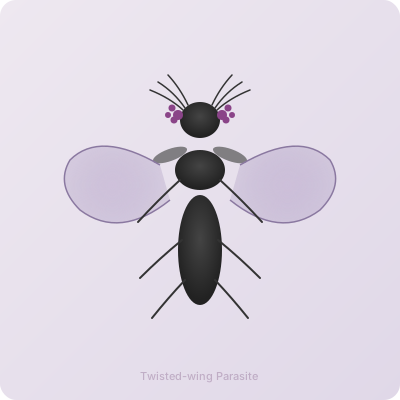
Strepsiptera
Bizarre endoparasites. Females live embedded inside host insects. Males have twisted hindwings and branched eyes, living only hours as free-flying adults.

Bristletails
Primitive wingless insects with humped, arched thorax. Three tail filaments. Can jump using abdominal muscles. Found under bark, in leaf litter, and on rocks.
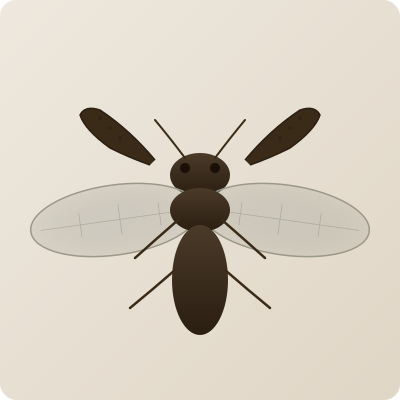
Skoka (Dobsonflies)
Large insects with impressive mandibles (up to 4cm in males). Huge wingspan. Aquatic larvae (hellgrammites) are voracious predators. Nocturnal fliers.
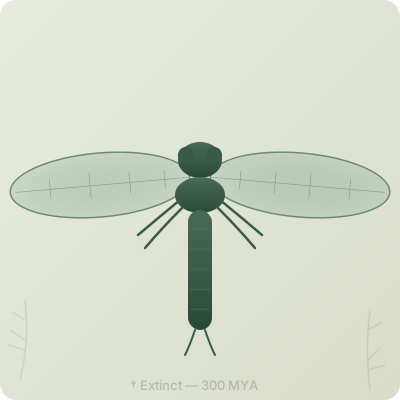
Meganeura
Prehistoric giant dragonfly-like insect from the Carboniferous period (~300 MYA). Wingspan up to 75cm — the largest insect ever. Thrived in high-oxygen atmospheres.
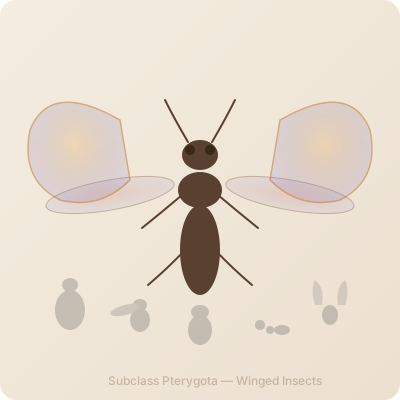
Pterygota (Winged Insects)
The vast subclass containing all winged insects and their secondarily wingless descendants. Includes 99% of all insect species — from beetles to butterflies.
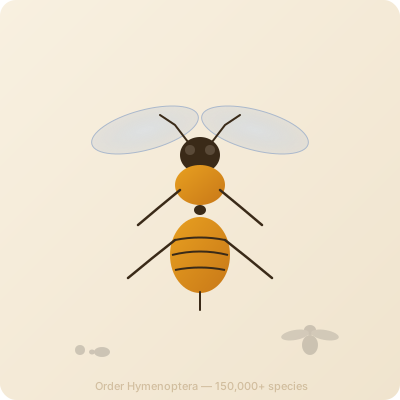
Hymenoptera (Order)
Third-largest insect order: bees, wasps, ants, sawflies, and parasitoids. Many are eusocial. Includes key pollinators and biological pest control agents.