What are Hymenoptera?
The order Hymenoptera ("membrane-winged") is one of the most ecologically significant insect orders, containing over 150,000 described species. This diverse group includes the familiar honeybees, yellowjackets, paper wasps, fire ants, and the lesser-known sawflies and parasitoid wasps.
What makes Hymenoptera truly extraordinary is their social behavior. While most species are solitary, the social species — particularly ants, honeybees, and some wasps — have evolved the most complex societies in the entire animal kingdom. The order is divided into two suborders: Apocrita (ants, bees, wasps) and Symphyta (sawflies, horntails, wood wasps).
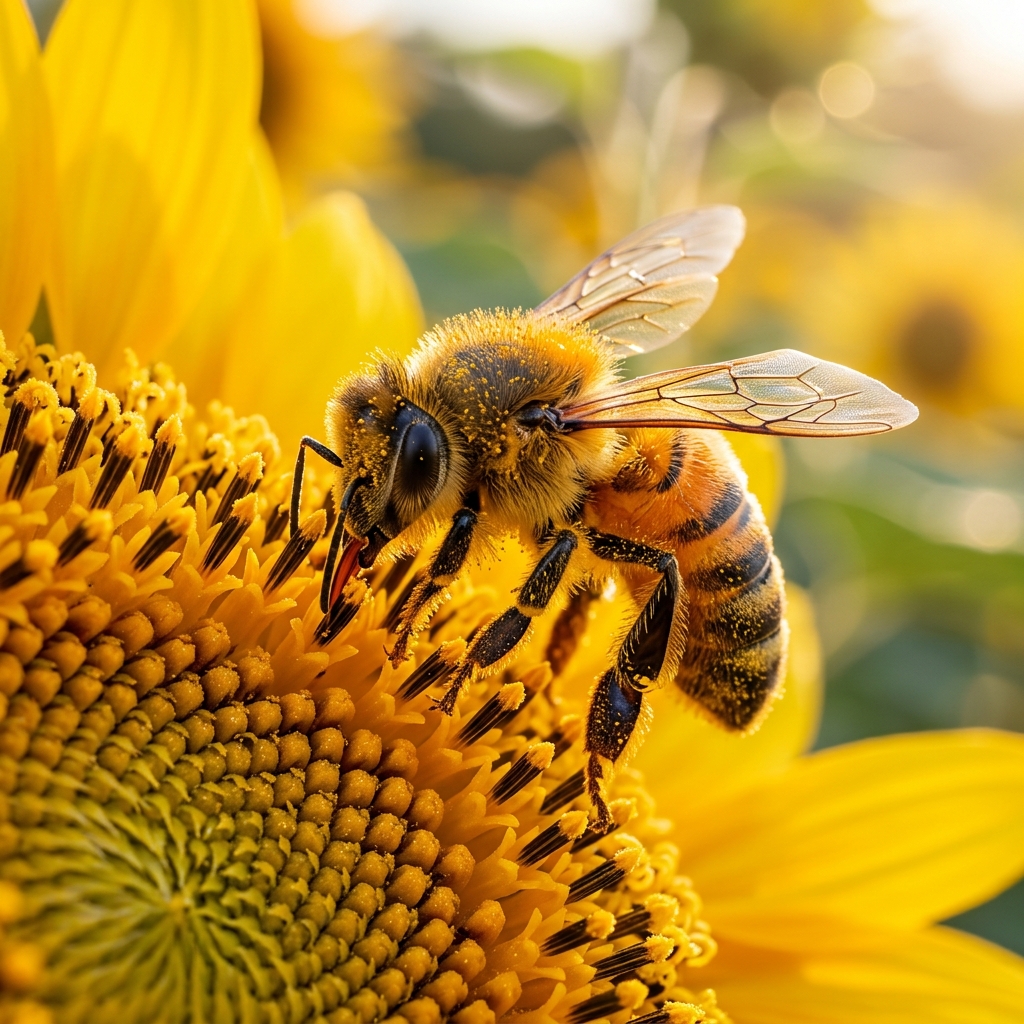
Key Characteristics
- Membranous wings: Two pairs of thin, transparent wings linked by tiny hooks (hamuli), though many species (like worker ants) are wingless.
- Narrow waist: A constricted "wasp waist" (petiole) between thorax and abdomen — one of the defining features of Apocrita.
- Stinger (ovipositor): In many species, the egg-laying organ has evolved into a venomous stinger used for defense or subduing prey.
- Eusociality: Many species display the highest level of social organization, with division of labor, cooperative brood care, and overlapping generations.
- Haplodiploidy: A unique sex-determination system where unfertilized eggs become males and fertilized eggs become females.
Suborder Apocrita
Apocrita comprises all ants, bees, and stinging wasps. Members are characterized by the constriction between the first and second abdominal segments, forming the distinctive "wasp waist."
Ants — Family Formicidae
With approximately 22,000 known species, ants are among the most successful organisms on Earth. Their combined biomass is estimated to equal or exceed that of all humans. Ants live in highly organized colonies that can number from a few dozen to millions of individuals.
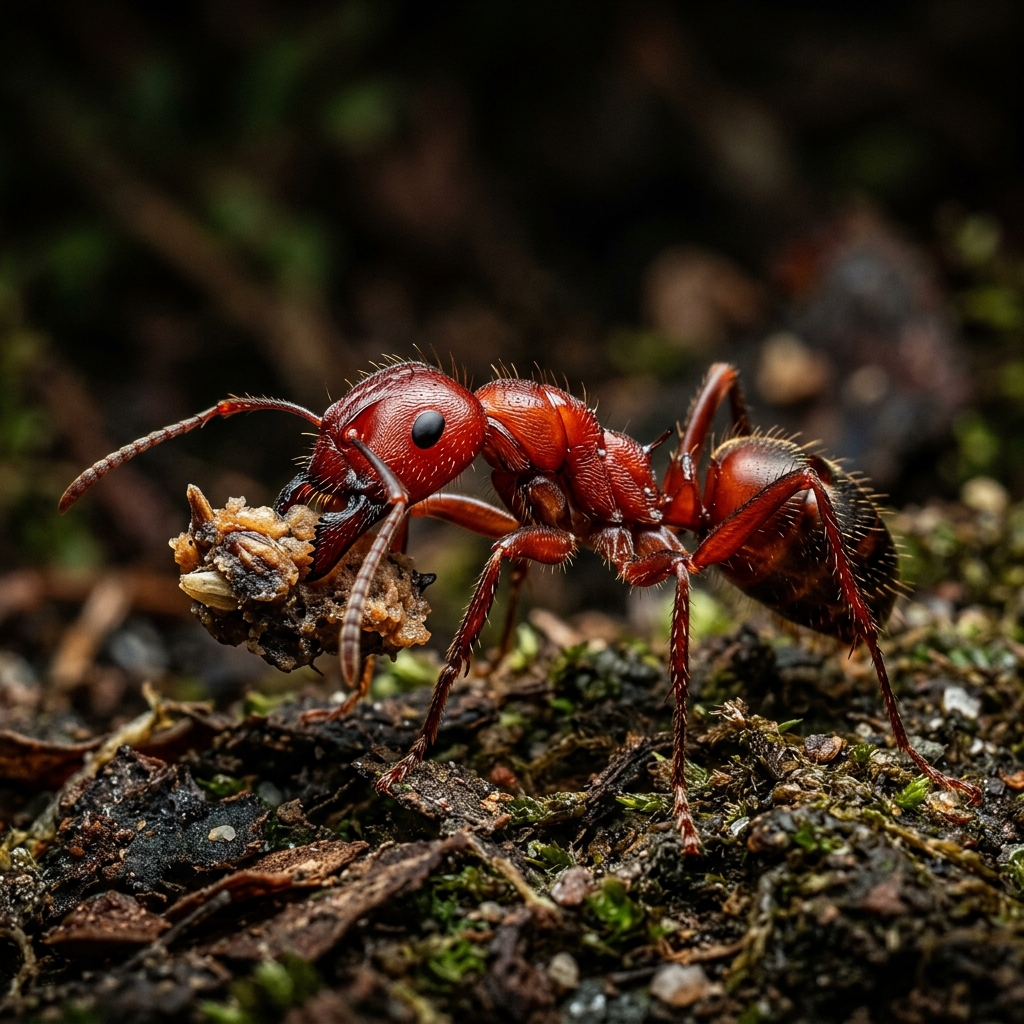
- Bullet ants (Paraponera clavata): Named for their extraordinarily painful sting — rated as the most painful insect sting on the Schmidt Pain Index. Found in Central and South American rainforests, a single sting produces waves of burning pain lasting up to 24 hours.
- Carpenter ants (genus Camponotus): Large ants that excavate wood to create nesting galleries. Unlike termites, they don't eat wood but can cause significant structural damage to buildings and trees.
- Driver ants (subfamily Dorylinae): African army ants that form massive raiding columns of up to 20 million individuals. They are nomadic, moving their entire colony in search of prey, and can overwhelm and consume small vertebrates.
- Eciton army ants (Eciton burchellii): New World army ants famous for their massive swarm raids. They form living bivouacs by linking their bodies together, creating nests, bridges, and walls from their own interlocking limbs.
- Fire ants (genus Solenopsis): Aggressive ants with a painful, venomous sting. The red imported fire ant (S. invicta) is a major invasive species that forms floating rafts during floods and has spread across the southern United States.
- Harvester ants (multiple genera): Seed-collecting ants that create elaborate underground granaries. They are important seed dispersers in many ecosystems and have among the most venomous insect stings.
- Leafcutter ants (genera Acromyrmex and Atta): The world's first farmers — these ants cut leaf fragments to cultivate underground fungus gardens. Their agriculture predates human farming by 50 million years. A single colony may contain 8 million workers.
- Honey ants (multiple genera): Certain workers (repletes) are living food storage vessels — their abdomens swell to the size of grapes with stored honeydew. They hang from tunnel ceilings and regurgitate food to nestmates on demand.
- Sahara desert ants (genus Cataglyphis): Navigate using a sun-compass mechanism and internal step counter. They can traverse scorching desert surfaces at speeds that scale to 100 body lengths per second, making them among the fastest ants.
- Weaver ants (genus Oecophylla): Build nests by weaving leaves together using silk produced by their own larvae. Workers hold larvae in their mandibles and use them like living glue guns to bind leaves together — a remarkable example of tool use.
Bees — Superfamily Apoidea
There are over 20,000 species of bees worldwide. While honeybees get most attention, the majority of bee species are actually solitary. All bees evolved from wasp ancestors and are vital pollinators — responsible for pollinating approximately 75% of flowering plants.
Solitary & Specialist Bees
- Cuckoo bees (various families): Brood parasites that lay their eggs in other bees' nests. The cuckoo bee larva kills the host's egg or larva and consumes the stored provisions — the avian cuckoo strategy in miniature.
- Leaf-cutter bees (family Megachilidae): Cut precise circular pieces from leaves to construct cylindrical nest cells. They are incredibly efficient pollinators — a few hundred leafcutter bees can pollinate as effectively as tens of thousands of honeybees.
- Mason bees (genus Osmia): Solitary bees that use mud or clay to construct nest partitions in hollow stems or holes. The blue orchard bee (O. lignaria) is a "super pollinator" — 300 times more efficient than honeybees for orchard crops.
- Mining bees (family Andrenidae): Solitary ground-nesting bees that excavate burrows in soil. With over 1,500 species, they are important early spring pollinators and completely harmless to humans.
- Plasterer bees (family Colletidae): Named for the cellophane-like secretion they plaster inside their ground nest cells to waterproof them. Considered one of the most ancient bee families.
- Sweat bees (family Halictidae): Often attracted to human perspiration for its salt content. Many species display beautiful metallic green or blue coloration. Some are primitively eusocial.
Family Apidae
- Bumblebees (genus Bombus): Fuzzy, robust bees capable of "buzz pollination" — vibrating flowers at specific frequencies to release pollen. They can fly in colder temperatures than most bees and are vital pollinators of tomatoes, blueberries, and cranberries.
- Carpenter bees (genus Xylocopa, subfamily Xylocopinae): Large, robust bees that bore tunnels into wood for nesting. Often mistaken for bumblebees but have shiny, hairless abdomens. Despite their intimidating size, males cannot sting.
- Euglossine bees (tribe Euglossini): Brilliantly iridescent tropical bees with extraordinarily long tongues. Males collect fragrant compounds from orchids, which they use in complex mating displays — they are the primary pollinators of many orchid species.
- Honeybees (tribe Apini):
- Western honeybee (Apis mellifera): The world's most managed pollinator, producing honey and beeswax while pollinating $15 billion+ worth of crops annually in the US. Colonies contain 20,000-60,000 workers communicating through the famous "waggle dance."
- Africanized honeybee (A. m. scutellata × A. mellifera): A hybrid known as "killer bees" — more aggressive in colony defense, pursuing threats much farther than European honeybees. They swarm more frequently and have spread throughout the Americas since their accidental release in Brazil in 1957.
- Stingless bees (tribe Meliponini): A diverse group of over 500 species in tropical regions. They produce a prized, tangy honey and defend their nests by biting rather than stinging. Some species practice "meliponiculture" — traditional beekeeping by indigenous peoples for thousands of years.
Wasps — Several Superfamilies
Wasps are an incredibly diverse group — in fact, ants and bees both evolved from wasp ancestors. Wasps range from tiny parasitoids smaller than a grain of sand to the formidable tarantula hawks. Many are crucial biological control agents.
- Braconid wasps (family Braconidae): Parasitoid wasps with over 17,000 species. Females inject eggs into caterpillars and other pest insects; the larvae develop inside the host, eventually killing it. Invaluable for biological pest control.
- Chalcid wasps (superfamily Chalcidoidea): A massive group of over 22,000 species, most are tiny parasitoids. Includes some of the smallest known insects — the fairyfly Dicopomorpha echmepterygis at just 0.139mm.
- Fig wasps (family Agaonidae): Each of the 750+ fig species has its own specific fig wasp pollinator. The wasp enters the fig, pollinates the flowers, lays eggs, and dies inside — one of nature's most intimate mutualisms, dating back 80 million years.
- Trichogrammatid wasps (family Trichogrammatidae): Egg parasitoids widely used in biological pest control. These minute wasps (0.2–1.5mm) lay their eggs inside the eggs of pest moths, preventing the pest from ever hatching.
- Cuckoo wasps (family Chrysididae): Stunningly metallic blue-green wasps that are brood parasites. Their heavily sculptured exoskeleton allows them to curl into an armored ball when attacked by their host species.
- Ensign wasps (family Evaniidae): Parasitoids of cockroach egg cases. Their small, flag-like abdomen bobs up and down as they walk, hence their common name.
- Gall wasps (family Cynipidae): Induce abnormal growths (galls) on plants, particularly oaks. The wasp larva develops inside the gall, which provides both food and shelter. Some galls were historically used to make iron gall ink.
- Hornets (genus Vespa): The largest social wasps.
- Northern giant hornet (V. mandarinia): The world's largest hornet (up to 5cm). Their venom is potent enough to dissolve tissue, and a group can destroy an entire honeybee colony of 30,000 bees in hours. Japanese honeybees defend against them by forming a "hot defensive bee ball" — hundreds of bees surround the scout hornet and vibrate, heating it to lethal temperatures.
- Ichneumon wasps (family Ichneumonidae): One of the largest insect families with 25,000+ species. Many have extremely long ovipositors for drilling through wood to parasitize borer larvae. Charles Darwin famously struggled to reconcile their parasitoid lifestyle with a benevolent Creator.
- Paper wasps (genus Polistes): Build open-faced nests from chewed wood fiber mixed with saliva. They demonstrate surprisingly complex social intelligence, including individual face recognition among colony members.
- Sand wasps (tribe Bembicini): Solitary wasps that dig burrows in sandy soil and provision them with paralyzed flies as food for their larvae. Some species progressively provision — returning repeatedly to feed growing larvae.
- Spider wasps (family Pompilidae): Solitary wasps specialized in hunting spiders.
- Tarantula hawks (genus Pepsis): Among the largest wasps (up to 7cm wingspan), they hunt and paralyze tarantulas to provision underground nests. Their sting is rated as one of the most painful insect stings — Justin O. Schmidt described it as "blinding, fierce, shockingly electric."
- Thread-waisted wasps (family Sphecidae): Solitary wasps with an extremely narrow petiole.
- Cicada-killer wasp (Sphecius speciosus): Large, impressive wasps that hunt cicadas. A female carries a paralyzed cicada (often heavier than herself) back to her burrow in a remarkable feat of aerial transport.
- Velvet ants (family Mutillidae): Actually wingless wasps (not ants at all!) covered in dense, velvety hair. Females are brood parasites of ground-nesting bees and wasps. Known as "cow killers" due to their extremely painful sting.
- Yellow jackets (genera Dolichovespula or Vespula): Aggressive social wasps that build large paper nests underground or in cavities. They are predators of other insects but also scavenge on human food and sugary drinks, leading to frequent human conflict.
Suborder Symphyta
The more primitive suborder of Hymenoptera, lacking the narrow waist of Apocrita. These are the sawflies, horntails, and wood wasps — often plant-feeders whose larvae resemble caterpillars.
- Horntails (family Siricidae): Large, wood-boring wasps with a prominent spine-like projection at the abdomen tip. Females drill into living or dead trees to lay eggs, and their larvae feed on wood with the help of symbiotic fungi.
- Sawflies (superfamily Tenthredinoidea): Named for the saw-like ovipositor females use to cut slits in plant tissue for egg-laying. Sawfly larvae are caterpillar-like and can be distinguished from moth/butterfly caterpillars by having 6+ pairs of prolegs (caterpillars have 5 or fewer).
- Wood wasps (families Xiphydriidae, Orussidae, and Anaxyelidae): Related to horntails, these wasps bore into wood. The family Orussidae is particularly interesting as they are parasitoids — the only parasitoid group in Symphyta, possibly representing the evolutionary transition to parasitism.
Ecological Importance
Hymenoptera are absolutely critical to ecosystem health. Bees and wasps pollinate approximately 75% of all flowering plants. Parasitoid wasps control pest populations naturally, reducing the need for chemical pesticides. Ants aerate soil, disperse seeds, and serve as food for countless other species. Their combined ecological and economic value is estimated in the hundreds of billions of dollars annually.